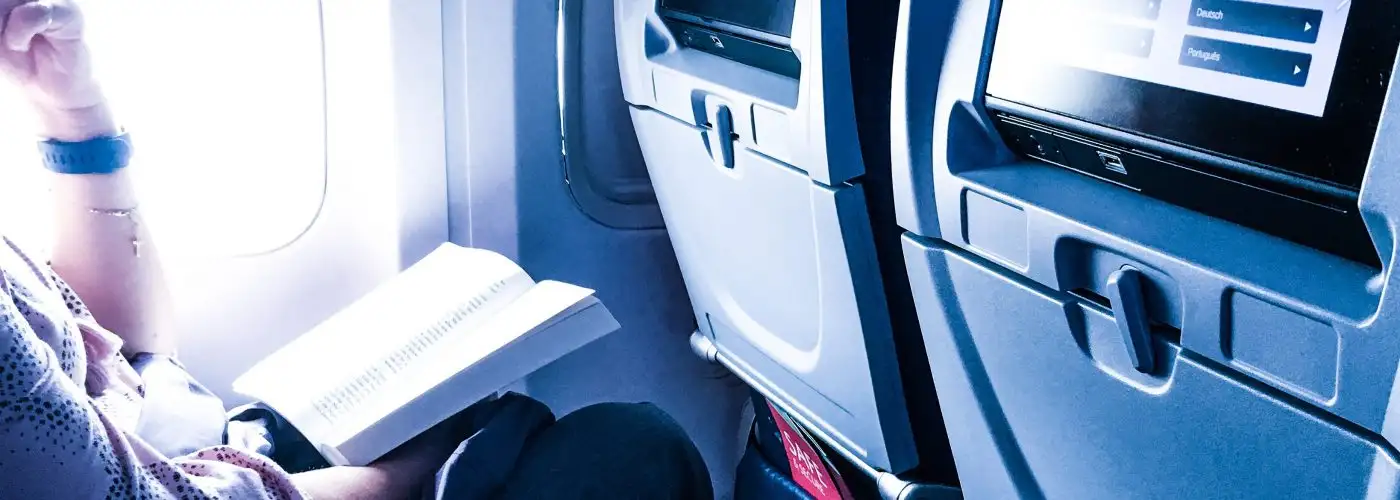
As aircraft seats become harder, closer together, and more likely to be full, getting comfortable in coach has grown into a nearly impossible challenge. Fortunately, there are little ways you can take control of your in-flight experience, from choosing the right seat to bringing the right gear. The 18 tips and tactics below will help you maximize your comfort and have a better flight.
Check SeatGuru

The first step in having a better flight is having a better seat. Keep in mind that a window or aisle seat isn’t guaranteed to be comfortable; there might be something blocking the leg space, or the seat might not recline, or there might be no window in that row. Check SeatGuru, SmarterTravel’s sister site, to make sure your sweet seat isn’t actually a lemon.
Reserve One Aisle and One Window Seat
This is an old travel trick. When you are traveling with another person on a flight that places most seats together in groups of three, book one person in the window seat and one in the aisle seat, leaving the middle seat open. Subsequent passengers will try to avoid middle seats, so if the flight isn’t full you might get the row to yourselves. If someone does book the middle seat and you prefer to sit together, the other passenger will almost always happily surrender the middle seat to either of you.
Think Hard Before Booking the Bulkhead
Bulkhead seats, with their additional legroom and option to pin your feet against the wall to stretch, can seem attractive. But the absence of underseat space means that you can’t have a personal item at your feet during takeoff and landing (as well as time spent taxiing, which can be considerable). This means keeping everything in the overhead bins (if there is room), and getting up after takeoff and before landing to retrieve and restow them.
Choose a Window Seat if You Plan to Sleep
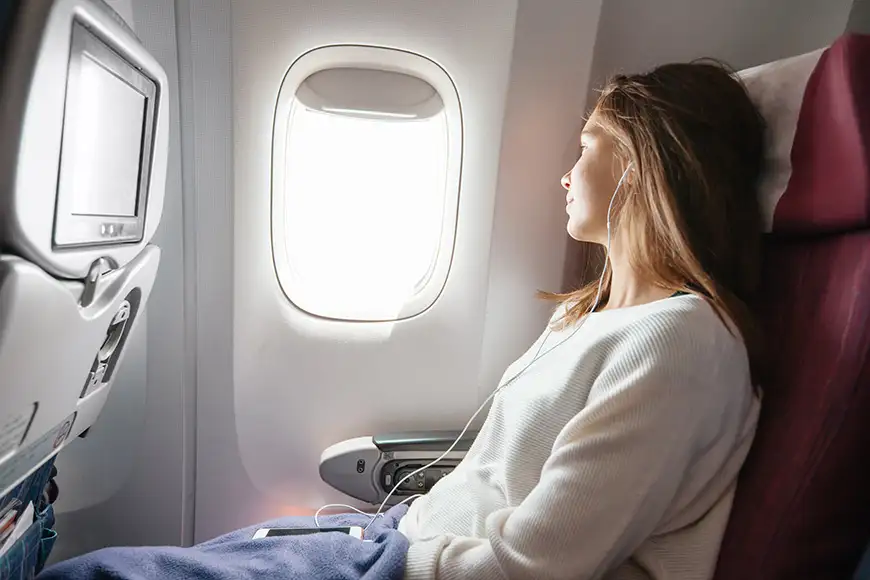
Most people find it easier to sleep in the window seat; you have something to lean on, less risk of falling over onto someone, and no one asking you to get up so they can get out of the row.
Block Noise to Make Your Food Taste Better
Noise-canceling headphones can help you avoid the chatter of your annoying neighbor, but they can also improve the way your meal tastes, according to an Oxford University professor. It turns out that the drone of engine noise can actually make travelers less sensitive to the taste and smell of their food.

Product Pick:
Bose QuietComfort 35II Headphones
Pack Compression Socks
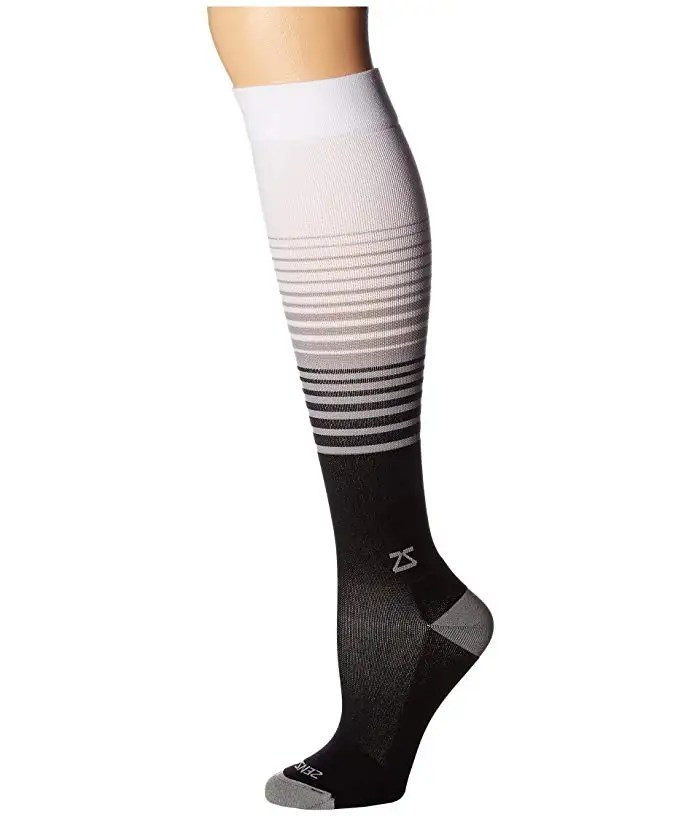
Compression socks make your legs and feet more comfortable by encouraging circulation—and may even help prevent deep vein thrombosis, a serious condition associated with long flights.
Product Pick:
Zensah Fresh Legs Classic Stripes Compression Socks
Test-Drive Your Neck Pillow
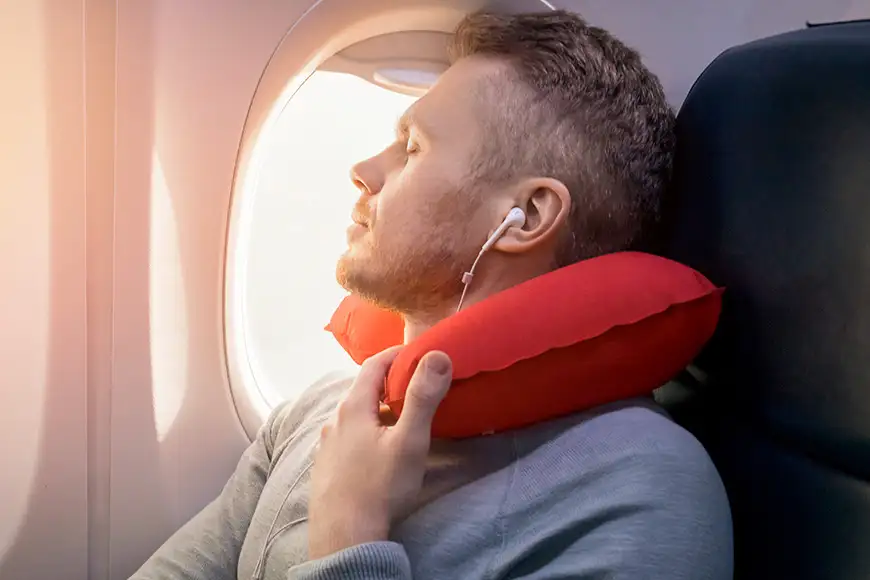
A neck pillow can make your in-flight experience significantly more comfortable—but don’t leave it up to chance. Before a recent trip to Europe I purchased a self-inflating, collapsible neck pillow at the airport. It was pretty much useless from the moment I opened it up; maybe a rhino’s neck would have been supported by the giant and overly flexible opening, but for me it was just a waste of space. Try out your new travel pillow in advance to be sure it’s worth the packing space in your carry-on.
Try Sleep Aids Before You Fly
Speaking of testing ahead of time, you don’t want a long overnight flight to be the first time you try a sleep aid medication. Many people have adverse reactions to these drugs, so you could end up feeling awful or being wound up when you are trying to slow down. For suggestions, see The Best Over-the-Counter Sleeping Pills for Long-Haul Flights.
Pack an Eye Mask
If you want to try to sleep before the flight crew decides to dim the lights in the cabin, or keep snoozing once they’ve turned them back on, an eye mask is a must.
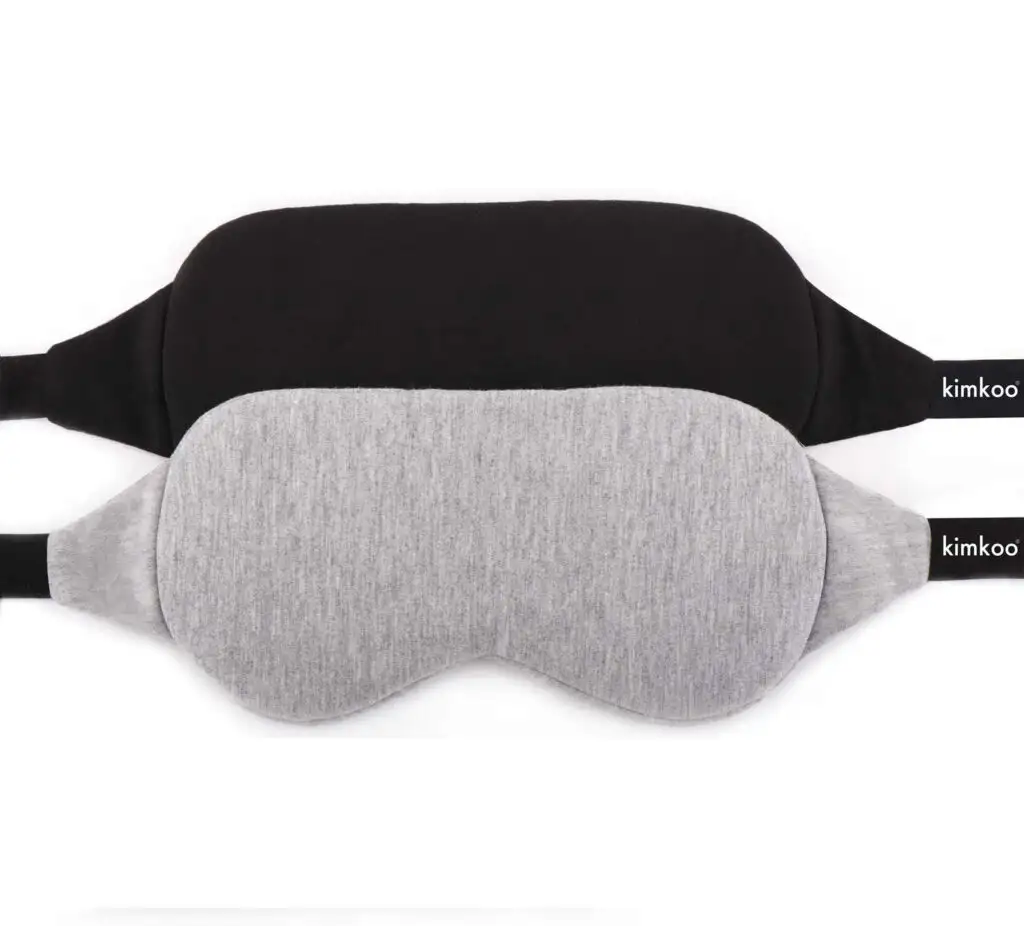
Product Pick:
Kimkoo Cotton Sleep Mask
Use a Soft Bag for Your Personal Item
A small, pliable carry-on bag will give you less grief when jammed into the ever-shrinking space for your legs on modern planes. Having even a few more inches of legroom can make for a better flight.
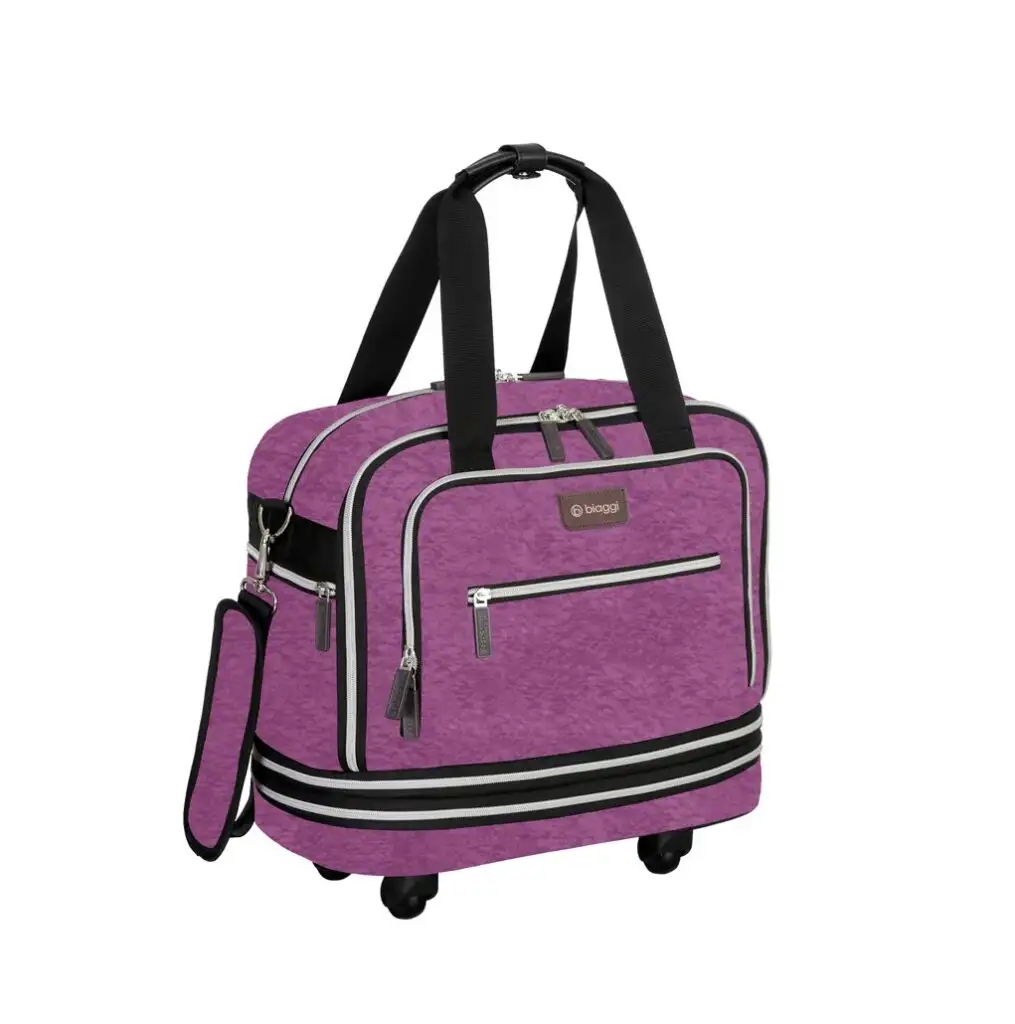
Product Pick:
Zipsak Boost! Expandable Under-Seat Carry-On
Dress in Layers

Some airplanes are hot, some are cold, and some go back and forth. Dressing in layers you can add or shed easily will give you more control over your comfort.
Bring a Portable Charger
Bringing a device with a depleted battery onto a plane is setting yourself up for a miserable in-flight experience. A small, fully powered portable charger in your carry-on can help get you through even the longest flights with enough juice to spare for phone calls on arrival.
Avoid Carbonated Drinks
According to flight attendants, drinking carbonated soda or other beverages can lead to bloating and discomfort in the pressurized air of an airplane cabin. Your best bet for staying hydrated (and comfortable) is always water.
Fly in the Morning

Planes generally encounter more turbulence as the day goes on and the ground warms up, according to Reader’s Digest. You’re also more likely to encounter thunderstorms in the afternoon. Take a morning flight for a gentler, better flight.
Sit Over the Wing
Similarly, the least bumpy seats in the plane are those over the wing; as pilot and author Patrick Smith notes in the Reader’s Digest story above, “A plane is like a seesaw. If you’re in the middle, you don’t move as much.”
Move Around
For comfort, health, and safety (as well as something to while away the time), do exercises in flight. Try these in-flight exercises that aren’t totally embarrassing.
Roll a Golf Ball Underfoot
For an in-flight massage, drop a golf ball on the floor below your seat, slip off your shoes, and roll the ball under each foot.

Product Pick
Pack of 2 Spiky Massage Balls
Ask for the Whole Can
To stay hydrated as well as enjoy the limited refreshments available, ask your flight attendant politely if you can have the whole can instead of just a cup of your preferred beverage; many will oblige.
What little things do you do to have a better flight? Let us know in the comments.
More from SmarterTravel:
- 10 Ways to Survive a Long-Haul Flight
- 5 Foods to Avoid Before Flying
- 10 In-Flight Essentials You Should Never Travel Without
Editor’s note: This story was originally published in 2017. It has been updated to reflect the most current information.
We hand-pick everything we recommend and select items through testing and reviews. Some products are sent to us free of charge with no incentive to offer a favorable review. We offer our unbiased opinions and do not accept compensation to review products. All items are in stock and prices are accurate at the time of publication. If you buy something through our links, we may earn a commission.
Top Fares From
Today's Top Travel Deals
Brought to you by ShermansTravel
12-Night Peru Escorted Tour, Incl. Sacred...
Wingbuddy
 vacation
$2198+
vacation
$2198+
Amsterdam to Copenhagen: Luxe, 18-Night Northern...
Regent Seven Seas Cruises
 cruise
$12399+
cruise
$12399+
Ohio: Daily Car Rentals from Cincinnati
85OFF.com
 Car Rental
$19+
Car Rental
$19+