
A European vacation can be expensive, but airfare doesn’t have to be. With low-cost carriers like Norse Atlantic and French bee increasing their presence in the United States in recent years, it’s never been easier to book a transatlantic flight on a budget. Below are seven affordable carriers that can get you to Europe without emptying your bank account.
Editor’s Note: Fares are accurate at time of publication.
French bee

Launched in 2018, low-cost carrier French bee operates out of five major airports around the US, including its recently expanded service from Miami International Airport. Destinations include Paris and Tahiti. Guests can book a standard ticket for as little as $460 roundtrip or can upgrade to Premium Economy for a fraction of the cost of a Premium Economy ticket on traditional carriers.
About the Fleet: French bee’s fleet is made entirely of Airbus A350 XWB aircraft, which are one of the most fuel-efficient models available and produce 40% less noise pollution than the previous generation.
Who Should Book French bee: Travelers looking to explore Paris or to use France as a homebase for a larger EU trip. Climate-conscious travelers may also appreciate the airline’s Green Pilot Certification—the first airline in the world, alongside its sister company Air Caribe, to receive the status.
Norse Atlantic Airways
If you’re planning a trip to the UK, Norse Atlantic Airways is for you. Launched in 2021 and based in Norway, Norse Atlantic operates flights between the US and the UK, Norway, Italy, Germany, and France. This long-haul carrier is set to add four new routes to London this summer, making it the airline with the most routes between the US and London Gatwick (LGW).
This expansion will add service from Boston, Los Angeles, San Francisco, and Washington Dulles to existing routes from New York (JFK), Orlando, and Fort Lauderdale (service from Orlando and Fort Lauderdale will be launching May 2023).
About the Fleet: Norse Atlantic operates their flights with Boeing 787 Dreamliners, which produce 25% lower CO2 emissions than the previous generation of aircraft.
Who Should Book Norse Atlantic: Travelers looking to get to London on a budget.
IcelandAir
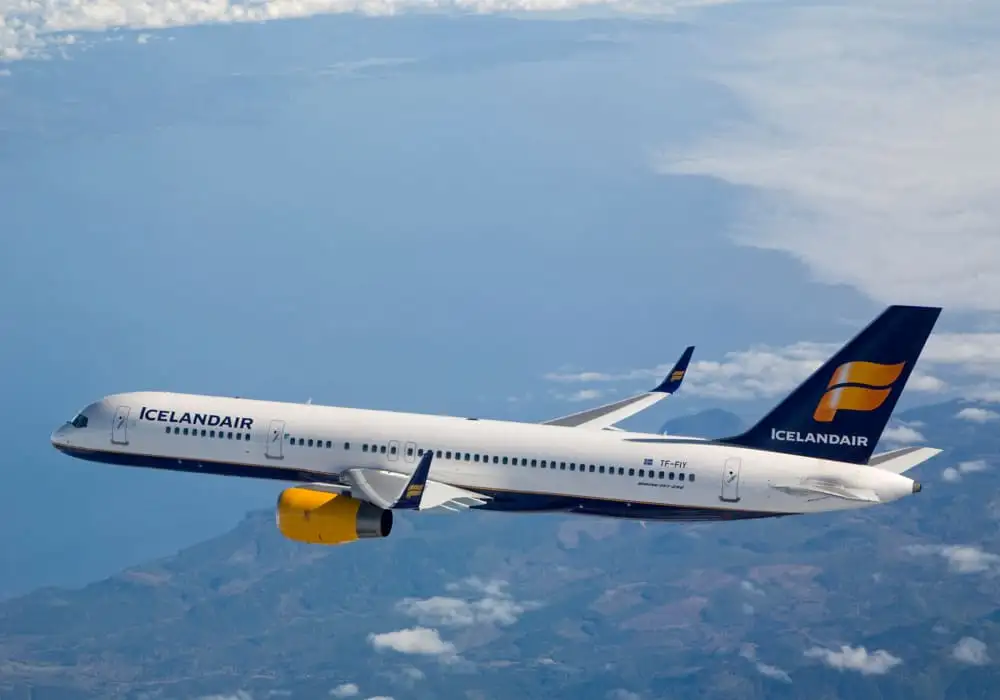
While not technically transatlantic, IcelandAir offers several flights from the US to Europe connecting through Reykjavik. It operates from twenty-one US airports across the country, with service expanding to include Detroit Metropolitan Airport beginning May 18th. With a wide network of US departure airports spanning coast to coast, travelers from anywhere in the country will be able to find an option that works for them.
About the Fleet: IcelandAir operates its long-haul flights on Boeing 757 (for trips to/from the West Coast and Canada) and Boeing 767 (for trips to/from Europe and the East Coast). They’ve also updated the fleet with the the Boeing 737 MAX 8 and Boeing 737 MAX 9, newer models that consume less fuel.
Who Should Book IcelandAir: Savvy travelers who want to take advantage of the airline’s “Add a Stopover” offer to explore Iceland.
Condor
Condor is a low-cost carrier based out of Frankfurt, Germany that has been in operation since 1955. The airline maintains dedicated terminals at New York (JFK), Los Angeles (LAX), San Francisco (SFO), Anchorage (ANC), Fairbanks (FAI), and Seattle (SEA), with additional routes to Boston, Las Vegas, Baltimore-Washington, Minneapolis, Portland, and Phoenix.
About the Fleet: Condor operates its long-haul flights on Airbus A330-200, Boeing 767-300ER, and Airbus A330neo aircraft.
Who Should Book Condor: Travelers flying from the West Coast and Pacific Northwest.
PLAY Air

PLAY Air, founded in 2019 by former WOW Air executives, is another relatively new budget airline on the scene. Operating from just three East Coast airports—Boston Logan International Airport, Washington Dulles International Airport, and New York Stewart International Airport—PLAY air flies to 15 destinations across Europe, including France, Spain, Ireland, Greece, and the Czech Republic.
About the Fleet: PLAY Air operates its itineraries on Airbus A320neo and A321neo aircraft.
Who Should Book PLAY Air: East Coasters looking for a quick and easy flight.
Worldwide by easyJet
EasyJet itself does not operate transatlantic flights, but through their Worldwide by easyJet program, travelers can book multi-leg journeys through their many partners, including PLAY Air and Norse Atlantic. Through Worldwide, travelers can book flights from New York, the Los Angeles Area, Chicago, Atlanta, and Orlando to European destinations like Rome, Barcelona, Edinburgh, and more.
About the Fleet: EasyJet has one of the “youngest” airfleets in the world, with the average age of their aircraft being just under 7 years. Flights operate on Airbus A319, Airbus A320CEO, Airbus A320NEO, and Airbus A321NEO. Note that when connecting to a partner airline through the Worldwide initiative, flights will be operated on the partner airline’s fleet.
Who Should Book easyJet: Travelers who want to browse easyJet’s extensive roster of destinations and let the best deal guide their trip.
JetBlue

It may be surprising to see a bigger brand name on this list, but JetBlue does technically fall into the low-cost carrier category. Rivaling traditional major carriers in both reputation and brand recognition, JetBlue flies out of 73 airports across 32 states plus 6 airports from Washington DC, Puerto Rico, and the US Virgin Islands. They also partner with American Airlines, Hawaiian Air, IcelandAir, JSX, Qatar Airways, Singapore Airlines, Silver Airways, South African Airways. AerLingus, Cape Air, and Porter, furthering their reach.
Passengers can fly Blue Basic for optimal savings or opt to fly Mint, Jetblue’s first class which offers extra comfortable lie-flat seats with aisle-access and plenty of legroom.
About the Fleet: Jetblue operates flights on a wide range of aircraft, including models that burn less fuel and models that reduce engine noise. Check Jetblue’s list of plane names to find the unique—and often pun-laden— name of your aircraft before departure.
Who Should Book Jetblue: Travelers who want the familiarity of a well-established domestic carrier for their long-haul experience.
You Might Also Like:
• 6 Savings Secrets for Senior Travel• The Best and Worst US Airlines for Lost Luggage
• The 10 Best Group Travel Tour Companies for 2024
• America’s 50 Worst Cities for Bedbugs
• The 13 Best Hotel Booking Sites
We hand-pick everything we recommend and select items through testing and reviews. Some products are sent to us free of charge with no incentive to offer a favorable review. We offer our unbiased opinions and do not accept compensation to review products. All items are in stock and prices are accurate at the time of publication. If you buy something through our links, we may earn a commission.
Top Fares From




Today's Top Travel Deals
Brought to you by ShermansTravel
France: 8-Night Paris, Avignon & Nice...
Infinity Worldwide Vacations
 vacation
$2880+
vacation
$2880+
Poconos: 3 Nts in Garden of...
ResortsAndLodges.com
 hotel
$305+
hotel
$305+
7-Nt Canada & New England Cruise,...
Princess Cruises
 cruise
$839+
cruise
$839+