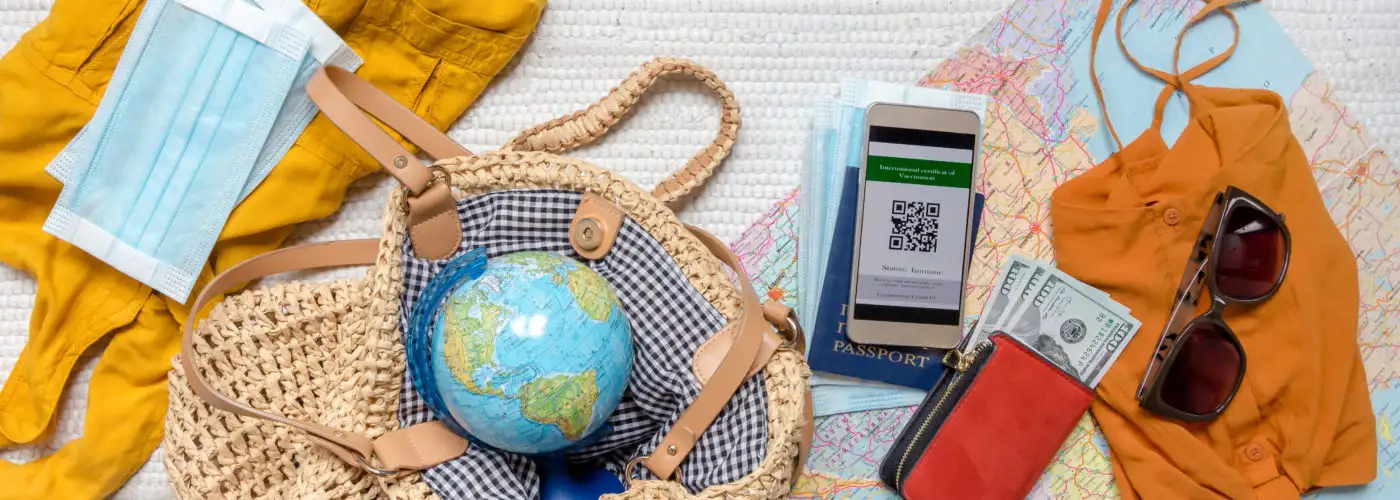
Traveling during the COVID-19 pandemic carries some level of risk, no matter how far you’re going. However, there are plenty of things we can do to reduce the risk of contracting or transmitting the virus while traveling.
1. Make Sure You’re Fully Vaccinated
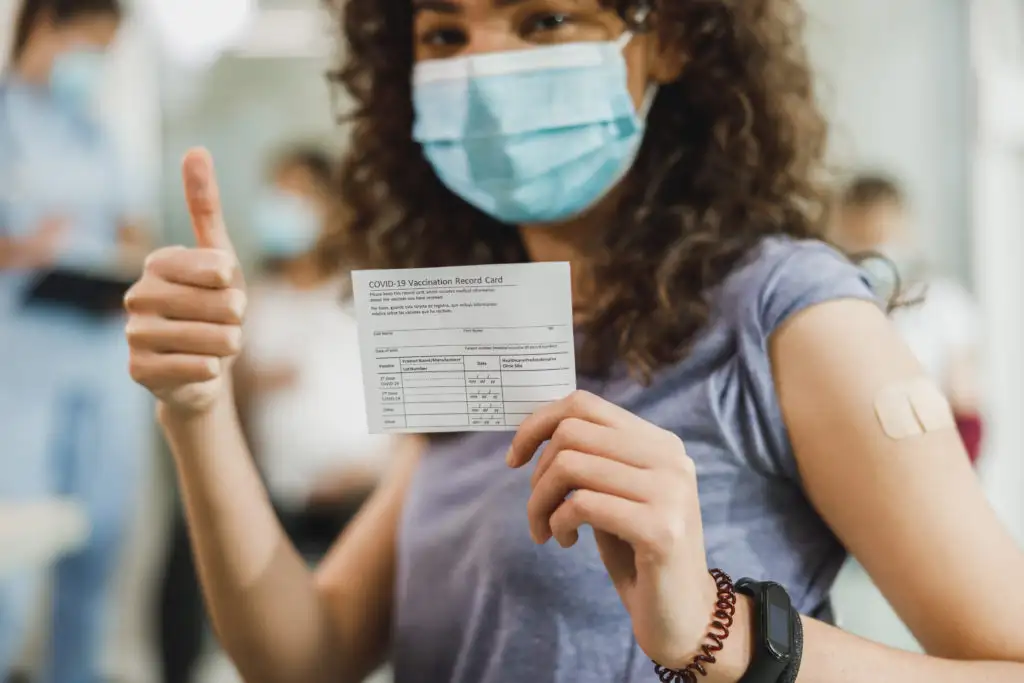
The Centers for Disease Prevention and Control (CDC) recommends that all travelers are fully vaccinated. This means waiting 14 days after your second dose until you travel, as well as making sure any booster shots in the future are up-to-date.
2. Wear A Medical-Grade Mask
The Transport Security Administration (TSA) is requiring all travelers on commercial flights, buses and trains to wear a mask until at least mid-January 2022. In addition to that, a growing number of (mainly European) airlines such as Air France and Lufthansa are no longer accepting cloth or fabric masks.
The ideal is to wear a medical-grade mask such as N95 or KN95. If you are going to wear a cloth mask, opt for one that is two- or three-ply.
And, as always, ensure that your mask completely covers your nose and mouth, and fits snugly under your chin and to the sides of your face.
3. Practice Good Hygiene and Social Distancing

When traveling, the CDC recommends:
- Avoiding crowds;
- Staying at least 6 feet (about 2 arm lengths) from anyone who is not traveling with you; and
- Washing your hands often and/or using hand sanitizer
4. Check COVID Rates At Your Destination
The New York Times has a great database showing COVID rates across the U.S. and the world. If you’re traveling within the U.S., head to this page. If you’re going to another country, go to this page instead.
Scroll down to the State trends (for the US) or Reported cases, deaths and vaccinations by country (for other countries). Then look at the Per 100,000 column to find out the incidence of COVID-19 at your destination. This can help guide where you are planning to visit, and indicate what the risk will be when you are there.
The CDC also has a helpful map showing COVID risk by country. It offers specific advice depending on where you are traveling and transiting through.
5. Make Sure You Meet All Entry Requirements
In the ever-changing world of COVID and travel, entry requirements are very fluid. The best places to find the most up-to-date and accurate information is on the State Department’s page for the country you are traveling to, the official embassy page, or the website of the airline you are traveling with.
Common entry requirements include:
- Taking a pre-departure test
- Being fully vaccinated
- Filling out an entry form
- Taking a rapid or PCR test upon arrival
- Quarantining upon arrival
6. Take A Pre-Departure Test

Whether it is mandated or not, it is a good idea to get tested before you depart on your trip. It’s usually best to do so within 72 hours (3 days) before departure. Note that it can take 24-48 hours to receive your result.
Also be aware that PCR tests are more accurate than rapid tests, meaning many countries are requiring the former. Make sure to give yourself enough time to get the results before you depart on your trip.
Most insurance policies cover COVID testing but some won’t if it’s specifically for travel, so be sure to check your policy. Many states and towns offer free COVID testing, as do certain pharmacies.
7. Take A Roadtrip
One of the best ways to reduce your risk is to take a roadtrip (in your own car.) This means that you don’t have to deal with transiting through an airport or jumping on a train or bus.
It also gives you more flexibility when you are at your destination, meaning you do not have to share public transport or get in a car with a rideshare driver.
8. Bring Your Vaccination Card
Think of your vaccination card as an extension of your passport. It is necessary to go to many destinations and, even when there, to enter shared spaces such as museums and restaurants. It’s definitely worth taking a picture of your vaccination card on your phone for easy access as well.
It’s best not to laminate your card. This is because booster shots may be required in the future, and will need to be documented on your card.
9. Sign Up For TSA Pre-Check and/or CLEAR
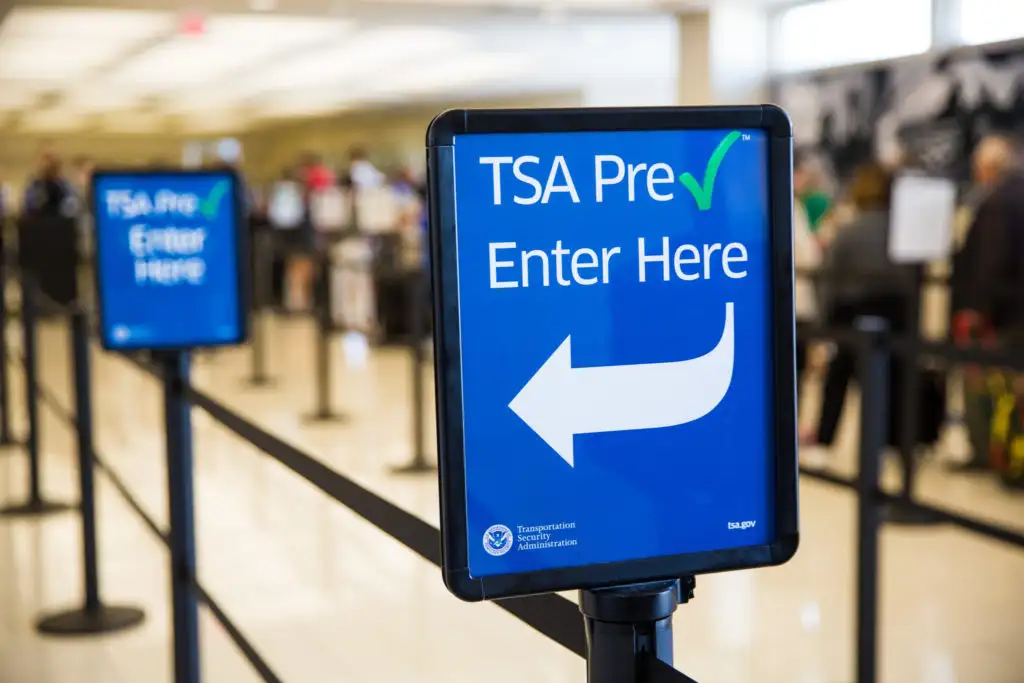
If you are going to travel by air, you can reduce your time standing in crowded lines at the airport by signing up to TSA Pre-Check, Global Entry and/or CLEAR. This will minimize the amount of time you need to spend in the airport, as well as give you more time to find a secluded space while waiting to board.
10. Fly Nonstop
If there is an option to fly nonstop rather than connecting through another airport, this will both reduce your travel time and the risk that you are taking whilst transiting. This also decreases the chances that a connecting flight gets canceled or delayed, which could mean hours stuck at an airport.
11. Pre-select Your Seat
The second half of the plane tends to be less crowded than the first half, so you may prefer to choose a seat further towards the back. When you’re there, make sure the air vents above you are fully open. Window seats are also less risky than aisle seats, as you’re further away from foot traffic.
12. Stay In Private Accommodation
Rental platforms like Airbnb and VRBO have experienced huge growth during the pandemic, reflecting travelers’ preference to be in their own space. However, do note that hotels and motels can often offer better value, as they are less in demand right now. Hotel chains also tend to have more standardized, rigorous cleaning procedures compared to private vacation rentals.
13. Eat Outdoors

This one is pretty obvious. Given that COVID spreads more easily indoors, try to eat outside (or get takeout) instead of dining inside a restaurant. It’s best to keep your mask on when ordering and interacting with service staff; then you can take it off when eating and drinking.
14. Choose Outdoor Activities
Again, pretty simple: it’s less risky to be outside than inside. So you may consider saving nightclubbing, eating indoors and going to the cinema for a trip in the future.
Instead, safer activities include hiking, cycling, surfing, camping, horseback riding, skiing and snowboarding, whitewater rafting and rockclimbing.
15. Quarantine/Test When You Get Home
The CDC recommends that fully vaccinated people who have traveled internationally get a COVID test 3-5 days after travel, and to self-monitor for COVID-19 symptoms. For international travelers who are not fully vaccinated, the CDC advises getting tested 3-5 days after travel, monitoring symptoms, and self-quarantining for a full seven days.
For fully vaccinated domestic travelers, the CDC advises only self-monitoring for symptoms is necessary. Unvaccinated domestic travelers should get tested 3-5 days after travel, quarantine for seven days, and self-monitor for symptoms.
You Might Also Like:
• 5 Ways You’re Sabotaging Your Sleep While Traveling• The Ultimate Toiletry Kit Packing List
• Shark Safety Tips: Everything You Need to Know to Prevent or Survive a Shark Attack
• 5 Worst Shoes for Travel (And What to Wear Instead)
• The Best Over-the-Counter Sleeping Pills for Long-Haul Flights
We hand-pick everything we recommend and select items through testing and reviews. Some products are sent to us free of charge with no incentive to offer a favorable review. We offer our unbiased opinions and do not accept compensation to review products. All items are in stock and prices are accurate at the time of publication. If you buy something through our links, we may earn a commission.
Top Fares From



Today's Top Travel Deals
Brought to you by ShermansTravel
France: 8-Night Paris, Avignon & Nice...
Infinity Worldwide Vacations
 vacation
$2880+
vacation
$2880+
Poconos: 3 Nts in Garden of...
ResortsAndLodges.com
 hotel
$305+
hotel
$305+
7-Nt Canada & New England Cruise,...
Princess Cruises
 cruise
$839+
cruise
$839+