
The rules of in-flight fashion are different from those on the ground. When you’re sitting for hours in a metal tube flying 35,000 feet in the air, comfort trumps style. Wear an outfit that keeps you cozy and relaxed, and you’ll likely appear more chic than the traveler tottering down the aisle in four-inch stilettos or sweating in too-tight synthetic fabrics. That’s why it’s crucial to know what to wear on a plane—and, more importantly, what not to wear on a plane.
Just ask Lady Gaga. In 2010, the pop star donned Alexander McQueen “armadillo shoes” and a wild outfit of black and yellow tape on a transatlantic flight. During the voyage, Gaga began to experience symptoms of deep vein thrombosis, or DVT, a life-threatening condition commonly caused by a combo of in-flight risk factors like low cabin pressure, dehydration, immobility, and cramped seats. When Gaga complained that her legs were swelling up during the flight, the cabin crew convinced her to change into something a little more comfortable—and a little less likely to incite an artery blockage.
Just as Gaga and other demigods of impractical couture should keep their costumes off the tarmac, those of us who fall into the jeans-and-sneakers category of fashion ought also to think carefully about what we wear on a plane.
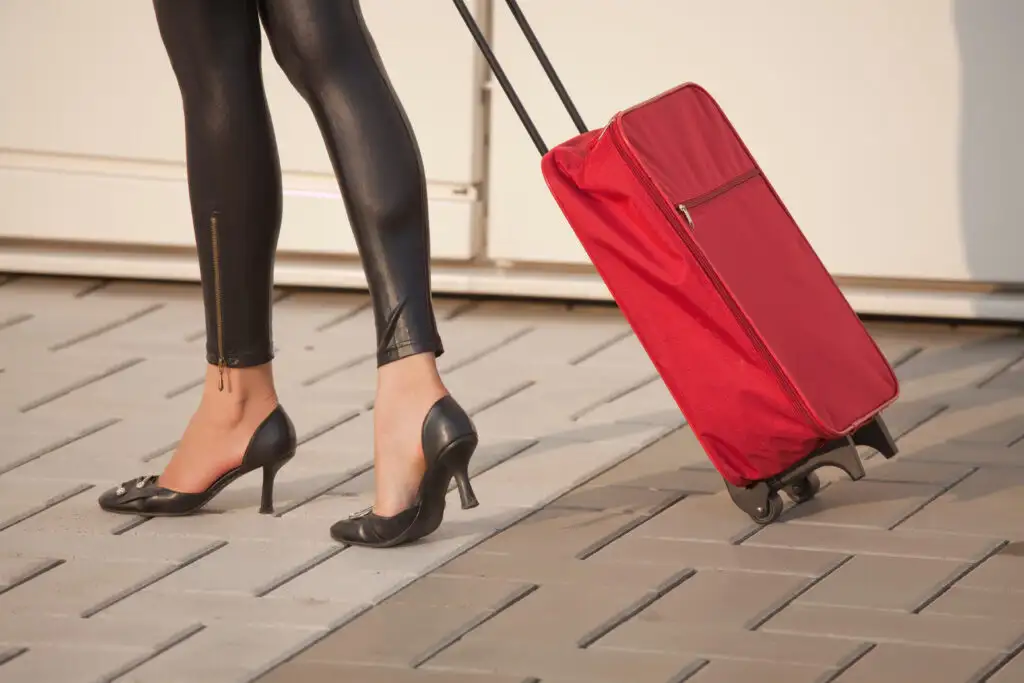
Don’t: Tight or complicated clothing.
Do: Simple garments made of natural, breathable fabrics.
Tight clothes can restrict blood flow in the already-confining space of an airplane seat, not to mention put you at risk for DVT. Ditch the skinny jeans, or anything tight enough to leave marks on your skin, and don loose-fitting natural fiber garments (clothes made from cotton or linen are a great choice).
Shun any fabrics that lack breathability, such as nylon or leatherette. Add your rubber raincoat or waterproof jacket to this list as well. (Note, however, that some high-quality waterproof jackets, like outerwear made from Gore-Tex, are quite breathable. It all depends on what it’s made of.) Less breathable fabrics hold sweat on the skin when it’s hot as well as prevent air circulation. A foolproof way to find breathable clothes for the plane: Stick with moisture-wicking activewear (I recommend prAna) or clothes sold from travel-specific suppliers like Patagonia.
Aircraft lavatories are tiny contrivances, about the size of a small closet or a very large Manhattan apartment, so you’ll want to wear something that isn’t too tricky to maneuver. Avoid bodysuits or complicated wrap shirts or dresses, as well as long pants or skirts that may graze the unsanitary (and often disturbingly wet) lavatory floor.
Don’t: High heels.
Do: Comfortable shoes.
Heels are restrictive, and they’ve been said to cause a long list of maladies, from chronic foot pain to hammer toe. Plus, unless you’re one of Charlie’s Angels, they don’t exactly facilitate a clean exit in case of emergency. And those boots with all the straps and chains sure are cute, but they’re the nightmare of every in-a-rush business traveler who must stand behind you as you undo myriad fastening mechanisms at airport security.
A good pair of comfortable shoes will make it easier for you to hoof it around the airport and sprint to the gate if you need to make a connection. Also consider slip-on shoes, which are wonderful for easing your way through security.
Don’t: Perfume or cologne.
Do: Freshly washed clothes.
You’ve been in Europe for two weeks, you’ve only packed so much, and by your date of departure you’ve run out of clean pants and shirts. It may be tempting to throw on something that more or less passes the sniff test and head off to the airport. But remember: Odors are intensified on a plane, where passengers are cramped in close quarters and stale air is recycled throughout the cabin. Plan ahead, and make a point to reserve a clean outfit for the plane ride home.
Strong-smelling perfumes, colognes, body sprays, and so on shouldn’t be worn in flight. Some passengers may not enjoy the scent of your CK One; others might suffer allergic reactions to synthetic fragrances. If you really must smell of the finest department-store brands upon arrival in your destination, pack a sample size and apply it once you land.
Don’t: Contact lenses.
Do: Glasses.
Airplane cabins are notoriously arid, to the point where the lack of humidity can dry out your skin, your nasal passages, and even your eyes. Contacts can become uncomfortable to wear in this type of environment, so consider bringing a pair of glasses to use during the flight instead.
Don’t: Offensive clothing.
Do: Anything you would wear to dinner with the in-laws.
Planes are pretty informal places; people wear T-shirts, baseball hats, and even slippers, and no one bats an eye. Carriers typically leave it up to flight attendants to judge whether a passenger’s garb is inappropriate for wear in the air. So how do you know if your outfit is appropriate?
If you can’t wear it to church or dinner with your mother-in-law, you probably shouldn’t wear it on a flight. And whether or not you agree with what certain airlines deem “inappropriate,” you may want to play it safe with your plane outfit to minimize chances of a disruptive travel experience. Passengers have been removed from planes for wearing everything from a simple crop top to pants splashed with expletives.
It also helps to know that your passenger status may make a difference in what you’re allowed to wear. For example, paying passengers are allowed to wear leggings on United flights, while those traveling on employee “buddy” passes are not.
Don’t: Warm-weather clothing.
Do: Layers, layers, layers.
Flyers must brave a multitude of temperature changes throughout their journeys. There’s the sweat-inducing jog through the sunny airport terminal, the warm 20 minutes while the plane sits on the tarmac pre-takeoff, and that in-flight arctic chill (against which hard-won, paper-thin airline blankets do nothing).
Layers are a traveler’s best weapon against such varying conditions. Furthermore, the more apparel you tie around your waist or throw over your shoulders, the fewer clothing items you need to ball up and stuff into your suitcase. Getting warm? Remove a few layers, bundle them, and then use them as a pillow.
Editor’s note: This story was originally published in 2017. It has been updated to reflect the most current information. Margaret Leahy contributed to this story.
Some of the links featured in this story are affiliate links, and SmarterTravel may collect a commission (at no cost to you) if you shop through them.
You Might Also Like:
• The 2024 Summer Travel Essentials Guide• The Best Shoes to Wear Through Airport Security
• 8 Tips from a Flight Attendant’s Daughter to Save Money on Your Next Flight
• 30 Ultra-Packable Travel Dresses for Summer
• The Best Machine Washable Silk Clothes for Travel
We hand-pick everything we recommend and select items through testing and reviews. Some products are sent to us free of charge with no incentive to offer a favorable review. We offer our unbiased opinions and do not accept compensation to review products. All items are in stock and prices are accurate at the time of publication. If you buy something through our links, we may earn a commission.
Top Fares From

Today's Top Travel Deals
Brought to you by ShermansTravel
France: 8-Night Paris, Avignon & Nice...
Infinity Worldwide Vacations
 vacation
$2880+
vacation
$2880+
Poconos: 3 Nts in Garden of...
ResortsAndLodges.com
 hotel
$305+
hotel
$305+
7-Nt Canada & New England Cruise,...
Princess Cruises
 cruise
$839+
cruise
$839+