
With every terror attack that grips the world, we all pause to reflect. World travelers and frequent flyers, however, likely react a little differently: People with upcoming adventures abroad tend to follow the news more closely, start researching travel insurance, and keep tabs on safety alerts.
And then there’s the question of canceling a trip all together. Are people actually changing their plans or avoiding certain places because of terrorism?
New data shows that while European tourism has slowed down, likely due to terrorism, it has also proven to be surprisingly resilient.
According to the IATA (International Air Transit Association), air travel growth is rising slower than it did last year: by about .7 percent less in June than the same month last year. European carriers saw the smallest rise in flight demand compared to other regions—Latin American air travel experienced the biggest. This is likely in part due to attacks like those that have rocked France, Belgium, Turkey, and Germany.
The silver lining: Tourism is still growing.
This constant signals that travelers are not letting terrorists stop them from seeing the world. When you consider that terror organizations aim to spread fear and divide people, that continued growth is an inspiring thing. Learning about other places and cultures despite the increase in attacks is precisely what the world needs in the face of terror, as long as it’s reasonably safe to do so.
Travel analysts have said that natural disasters typically deal a bigger blow to tourism than terrorists do. Perhaps the biggest change travelers make when it comes to traveling after an attack is simply buying travel insurance.
Here’s how insurance agency Squaremouth Inc. says travel insurance purchases grew after some recent terror attacks:
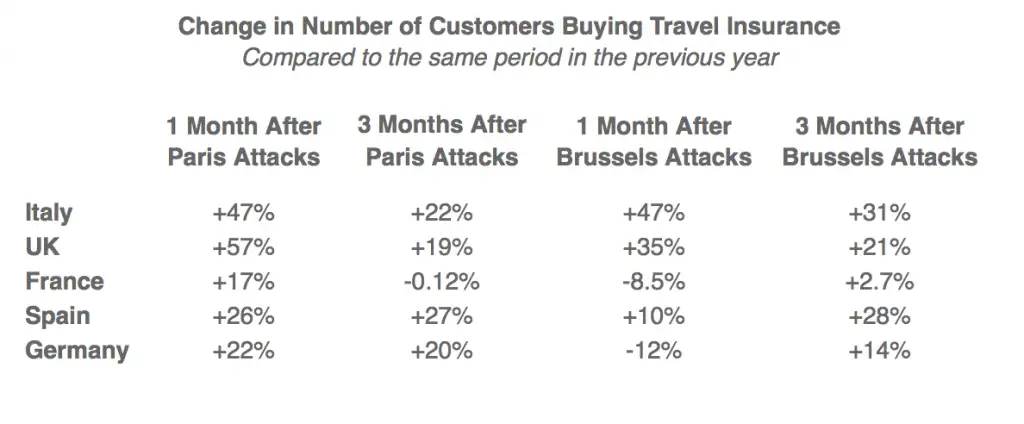
Those sizable increases prove there’s certainly more concern about visiting Europe and the U.K. following attacks. But most people are clearly still going—with travel insurance.
According to the World Travel and Tourism Council, it takes about 13 months for most destinations to recover from the tourism drop that usually follows an attack. But that’s not as long as some might expect. In fact, the organization told Fortune that “large-scale terrorist attacks in major European capitals have had a decidedly limited impact on overall tourism in the country.”
Travelers aren’t throwing in the towel.
More from SmarterTravel:
- Packable Items That Can Save Your Life in a Disaster
- Best Apps to Prevent Travel Disasters
- The Ten Most Important Safety Tips for Travelers
Associate Editor Shannon McMahon writes about all things travel. Follow her on Instagram and Twitter for more insight and adventure.
We hand-pick everything we recommend and select items through testing and reviews. Some products are sent to us free of charge with no incentive to offer a favorable review. We offer our unbiased opinions and do not accept compensation to review products. All items are in stock and prices are accurate at the time of publication. If you buy something through our links, we may earn a commission.
Top Fares From


Today's Top Travel Deals
Brought to you by ShermansTravel
France: 8-Night Paris, Avignon & Nice...
Infinity Worldwide Vacations
 vacation
$2880+
vacation
$2880+
Poconos: 3 Nts in Garden of...
ResortsAndLodges.com
 hotel
$305+
hotel
$305+
7-Nt Canada & New England Cruise,...
Princess Cruises
 cruise
$839+
cruise
$839+