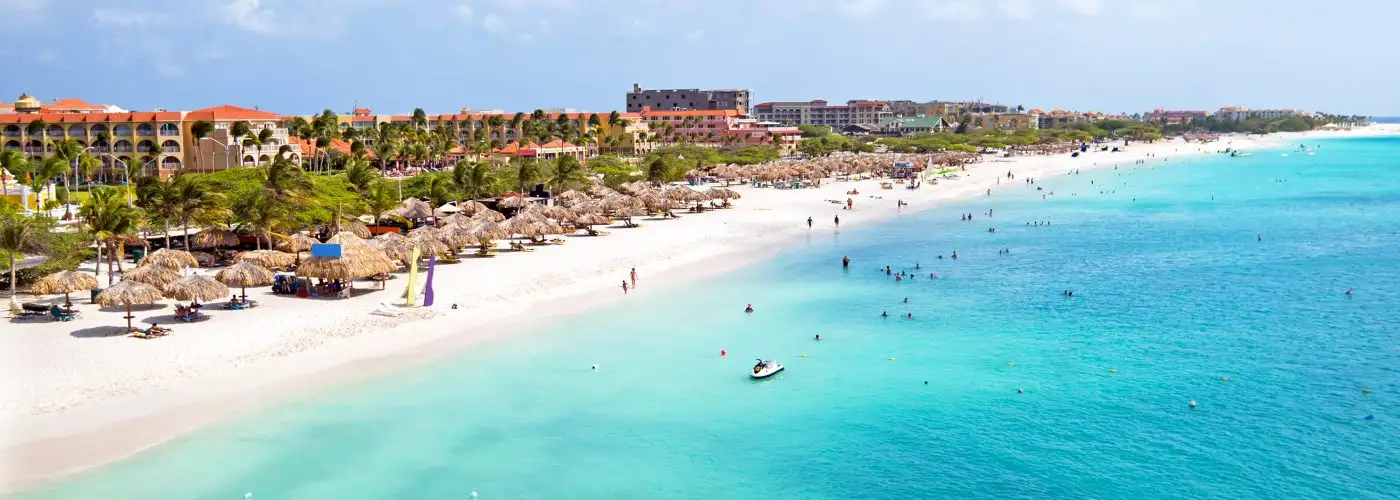
Tips on Aruba Warnings and Dangers
Aruba is a wonderful and warm island that tourists enjoy all year long. That doesn’t mean, however, that there aren’t warnings and dangers you need to take into consideration when you visit.
[viator_tour destination=”28″]
Watch Out for Jellyfish
Whether you are on the beach or in the water, beware of jellyfish. Boat propellers tend to catch the jellyfish and scatter them in them in both locations. If you are sensitive to jellyfish stings then wear a wetsuit in the water, and you might want to bring Benadryl.
Take Care in the San Nicolas Area
While the San Nicolas has many wonderful art galleries and beaches and is typically safe during the day, the area does have a reputation for prostitution, drugs, and car break-ins. It is the only place on the island where prostitution is legal, and car break-ins are common, specifically in front of Charlie’s Bar. It is recommended you park next to the nearby oil refinery’s outer walls.
If you plan on visiting the area at night, you might want to go on Thursdays during one of the Caribbean Festivals, which attract plenty of tourists and locals alike. There is always more safety in numbers, and it’s a great way to enjoy all that the San Nicolas area has to offer while reducing any safety concerns.
Keep Vehicles Off Sand Dunes
While it might seem like fun to use an off-road vehicle on the sand dunes, it isn’t permitted in Aruba. If you want to explore the dunes, walking is the better bet, or you can take a guided tour in an off-road vehicle instead.
In addition, it is not uncommon for vehicles to become stuck in the sand. Keep in mind, there’s plenty of parking space on the flat areas around the dunes.
Baby Beach Water Is Deeper Than it Looks
Baby Beach is known for its shallow blue waters and tropical fish. It’s also a great place to snorkel and swim, but the depth can depend on the tide. There is a small island not too far off of the beach, where at low tide, the water level is about four feet deep, but once the tide comes back in, it increases to five or six feet deep. There is also an undercurrent that can make it difficult to swim back to shore from here.
If you are with children or are snorkeling near the island, just make sure you find out when the high tide is before you make your way to the island. That way you can enjoy the views and warm water without the issue of getting back to shore safely.
More from SmarterTravel:
- Aruba Travel Guide: What to Do in Aruba
- Safety Tips in Aruba – Travel Safety Tips
- 10 Best Things to Do in Aruba
[viator_tour destination=”28″]
Editor’s Note: The information contained on this page was compiled using real traveler reviews about warnings and dangers in Aruba.
We hand-pick everything we recommend and select items through testing and reviews. Some products are sent to us free of charge with no incentive to offer a favorable review. We offer our unbiased opinions and do not accept compensation to review products. All items are in stock and prices are accurate at the time of publication. If you buy something through our links, we may earn a commission.
Top Fares From




Today's Top Travel Deals
Brought to you by ShermansTravel
France: 8-Night Paris, Avignon & Nice...
Infinity Worldwide Vacations
 vacation
$2880+
vacation
$2880+
Poconos: 3 Nts in Garden of...
ResortsAndLodges.com
 hotel
$305+
hotel
$305+
7-Nt Canada & New England Cruise,...
Princess Cruises
 cruise
$839+
cruise
$839+