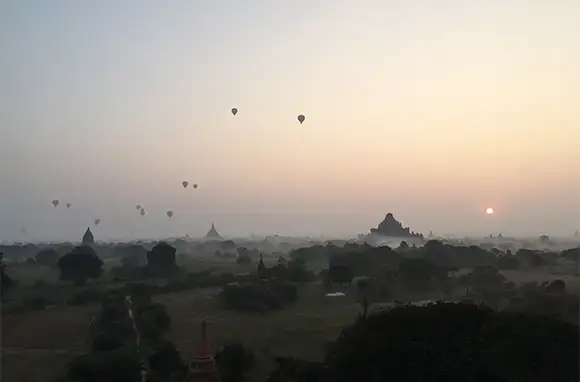
Myanmar has long been considered one of the most isolated countries on earth. As it emerges back onto the world scene, travelers can again more easily discover treasure trove of inspiring sights and experiences.
Bagan is among Myanmar’s most famous destinations, and is revered for its thousands of temples stretching across the unsullied landscape.
Image Gallery
Shwe Pyi Thar
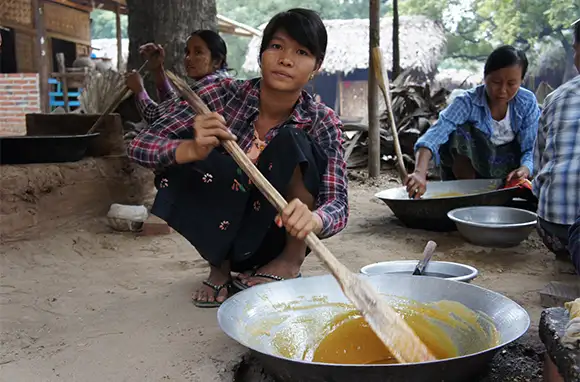
In the riverside village of Shwe Pyi Thar, a woman stirs toddy palm sap. Candy made from the sap is a Myanmar favorite.
Shwe Pyi Thar
In the riverside village of Shwe Pyi Thar, a woman stirs toddy palm sap. Candy made from the sap is a Myanmar favorite.
U Bein Bridge at Sunset
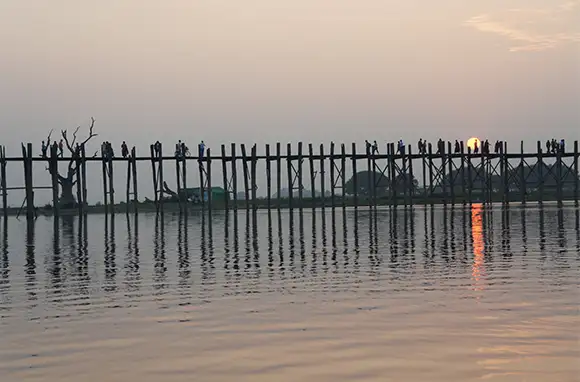
The U Bein Bridge is a three-quarter-mile-long bridge that was built in 1783 from reclaimed teakwood from an old royal palace.
Amarapura
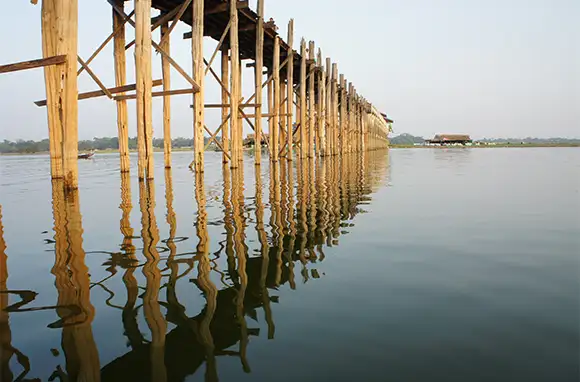
Just outside Mandalay is Amarapura, the former capital of Myanmar and home to the famous U Bein Bridge.
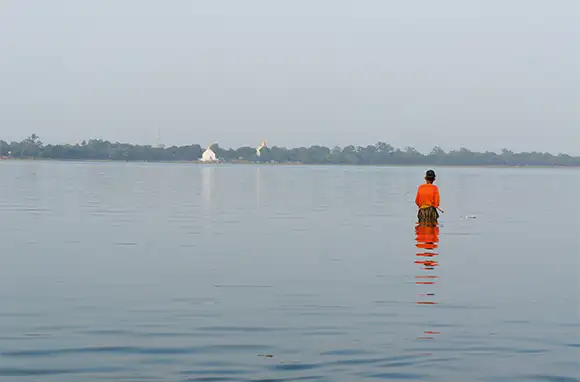
Taungthaman Lake
A fisherman tends his underwater nets in Taungthaman Lake, home to the famous U Bein Bridge.
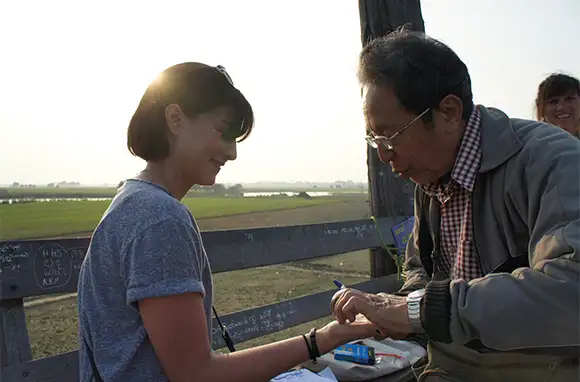
Palm Reading
Astrology is a huge part of Myanmar culture. Locals consult astrologers before making major decisions, and at tourist attractions, tourists can get their palms read and learn the best dates for upcoming big events.
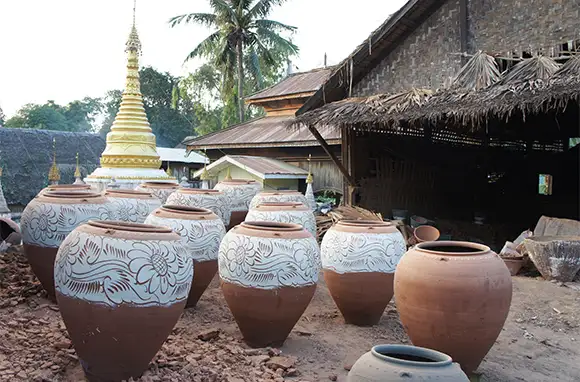
Kyauk Myaung
The town of Kyauk Myaung is famous for its pottery making. Pots made from local river clay and fired in giant ovens come in all sizes, ranging from a few inches high to 50-gallon Martaban jars.
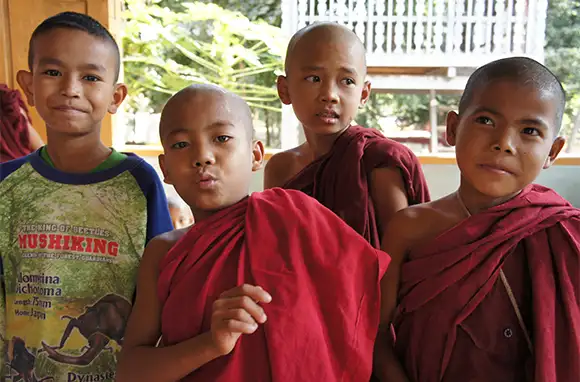
Young Monks
Buddhist families send their sons to become monastery novices for at least a short while during childhood. Young men have another chance to revisit monastery life, and at any time, men can return for a week or a month or a year to live as monks.
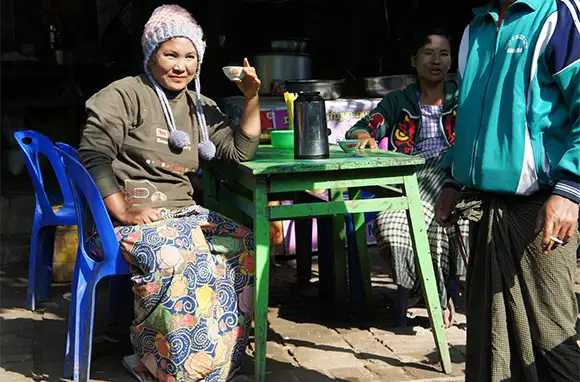
Tea Shops
Tea shops—often made up of nothing more than a burner, a kettle, and some low-slung plastic chairs and tables—are a huge part of daily life in Myanmar, especially for men.
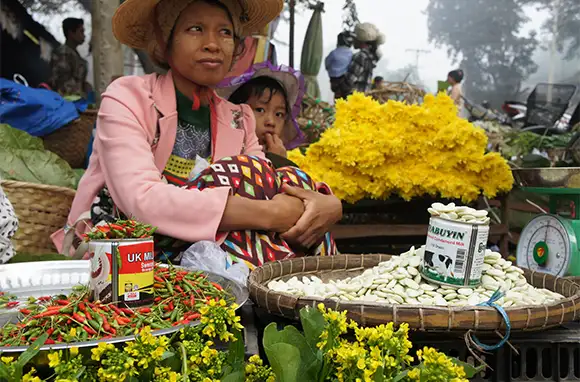
Market Seller in Katha
Markets are a daily part of small-town life in Myanmar. "Wet" markets sell fish, meat, produce, and other items that must be fresh; while "dry" markets sell items with longer shelf lives.
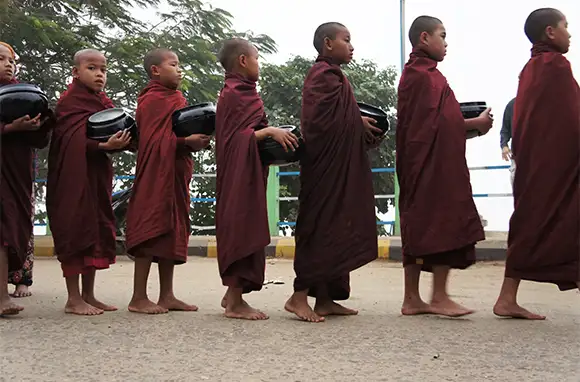
Dawn Procession of Monks
Monks rely on daily donations of food for their daily meals. So early each morning they wrap their robes, cradle their bowls, and form a procession. Each person who donates food puts just one scoop in each bowl. The monks then return to the monastery and share the meal.
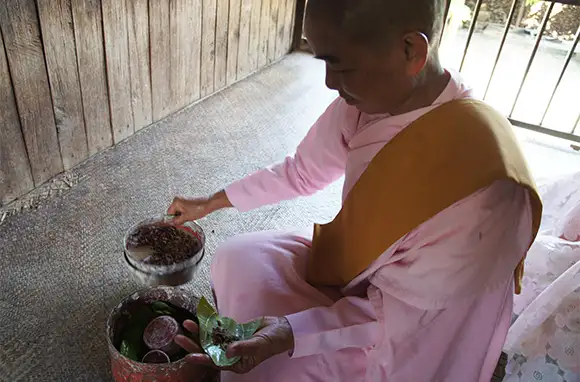
Nun Rolling Betel Nut
At a Buddhist nunnery in the village of Kyun Daw, a nun prepares betel nut for herself. Kyun Daw is a small village along the Irrawaddy that's best known for the 7,000 stupas (a religious structure holding a Buddha relic) surrounding the local monastery.
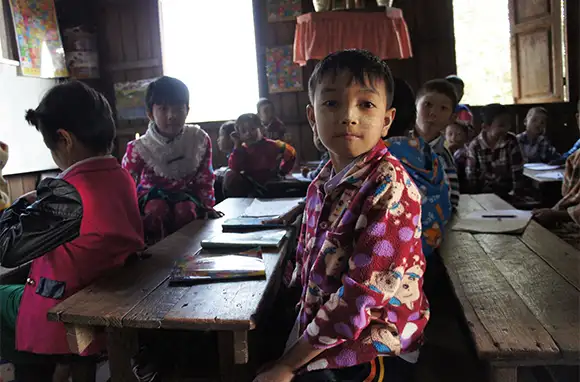
Kyun Daw
In the town of Kyun Daw, most younger children don't yet wear longyis, but many wear the traditional thanaka paste on their faces. Thanaka protects the skin from sun damage and is reputed to have many healing properties.
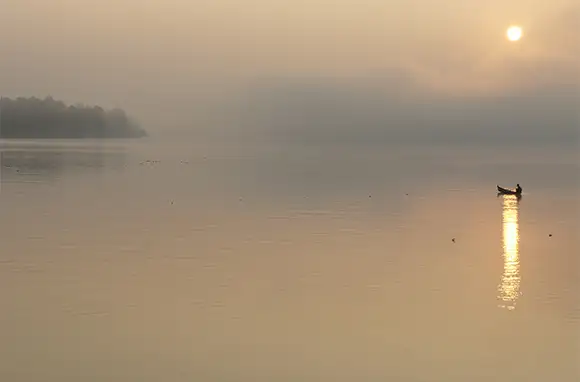
Sunrise Over The Irrawaddy
A fisherman gets an early start along the peaceful stretch of river between Bhamo and the dramatic Second Defile.
More from SmarterTravel:
- What I Packed: Myanmar in Winter
- 12 Destinations That Should Be on Your Radar in 2016
- Beautiful Myanmar: 26 Revealing Moments Caught on Video
Christine Sarkis has her fingers crossed that the people of Myanmar will benefit from the current changes. Follow her on Twitter @ChristineSarkis and Instagram @postcartography for more advice about making every vacation the best vacation.
We hand-pick everything we recommend and select items through testing and reviews. Some products are sent to us free of charge with no incentive to offer a favorable review. We offer our unbiased opinions and do not accept compensation to review products. All items are in stock and prices are accurate at the time of publication. If you buy something through our links, we may earn a commission.
Top Fares From

Today's Top Travel Deals
Brought to you by ShermansTravel
Ireland: 9-Night Dublin, Kilkenny, Killarney, Galway...
Brendan Vacations
 vacation
$3875+
vacation
$3875+
Amsterdam to Copenhagen: Luxe, 18-Night Northern...
Regent Seven Seas Cruises
cruise
$12399+
Ohio: Daily Car Rentals from Cincinnati
85OFF.com
 Car Rental
$19+
Car Rental
$19+