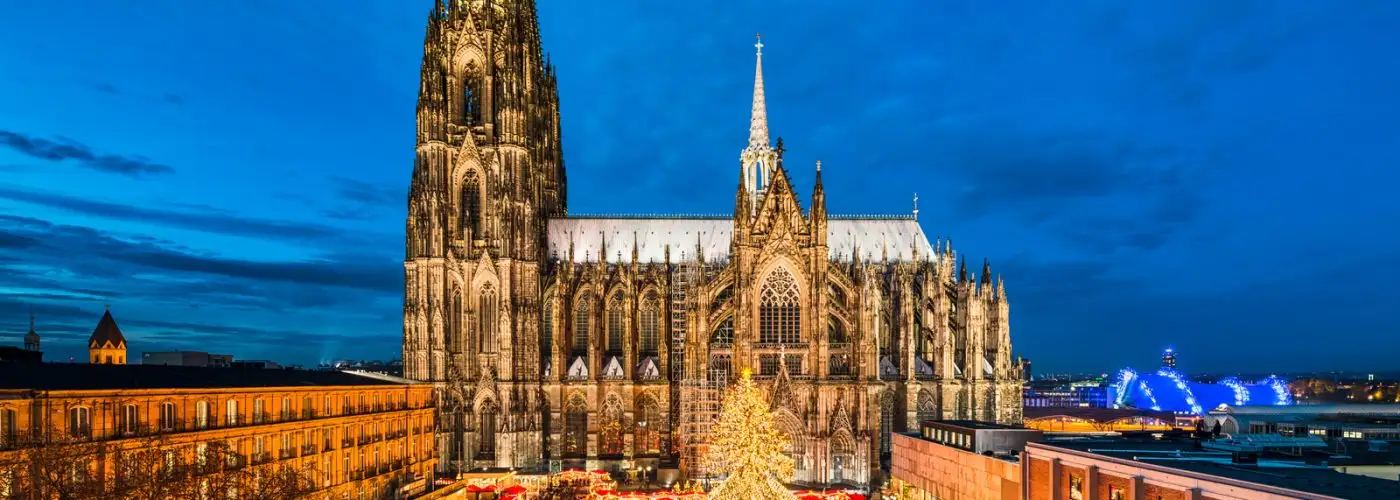
Christmas markets are a quintessential German phenomenon. And while there are plenty of German cities that conjure up the ultimate Christmas spirit, other European cities are stepping up to capture an advent magic all their own. Here are the 10 best christmas markets you should add to your travel list (and check twice) to fill your holidays with the joy and warmth of the season.
Best Christmas Markets in Europe
Image Gallery
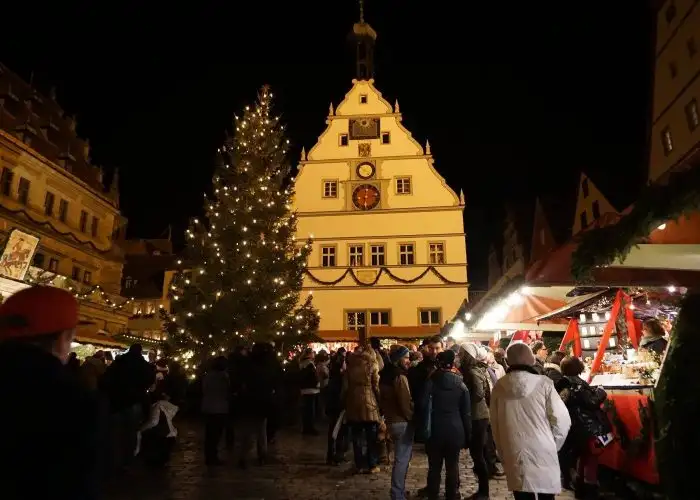
Rothenberg ob der Tauber, Germany
One of the most postcard-perfect villages in Germany provides the ideal setting for a Christmas market. Rothenberg has had an advent market as far back as the 15th century, and the surrounding city walls and cobblestone streets makes it feel like little has changed since then.
Nowadays, Santa Claus hands out nuts and sweets to children each night while visitors flock to stalls selling the iconic Rothenberg Snowball. This holiday treat is made with shortcrust pastry traditionally dusted in powered sugar, but often covered in chocolate, nuts, and other sweets.
Rothenberg ob der Tauber, Germany
One of the most postcard-perfect villages in Germany provides the ideal setting for a Christmas market. Rothenberg has had an advent market as far back as the 15th century, and the surrounding city walls and cobblestone streets makes it feel like little has changed since then.
Nowadays, Santa Claus hands out nuts and sweets to children each night while visitors flock to stalls selling the iconic Rothenberg Snowball. This holiday treat is made with shortcrust pastry traditionally dusted in powered sugar, but often covered in chocolate, nuts, and other sweets.
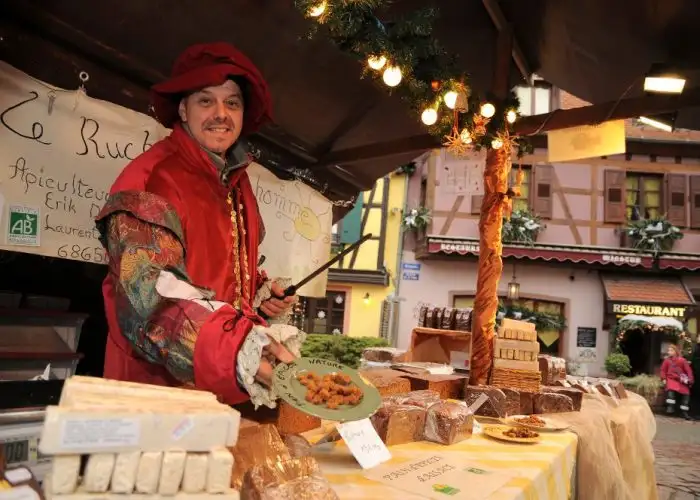
Ribeauville, France
Forgo France’s largest Christmas market—and the crowds—in Strasbourg for another market in the Alsace region: Ribeauville.
The town’s medieval market draws its own crowds since it’s only open two weekends of the advent season. An array of jugglers, dancers, and entertainers dressed in medieval garb roam the streets, dazzling visitors with music, dance, and holiday magic. The city itself—surrounded by three castles, portions of its town walls, and defensive towers—makes you feel like you’ve stepped back to the Middle Ages. Regional wine makers even open up their cellars for special holiday tours.
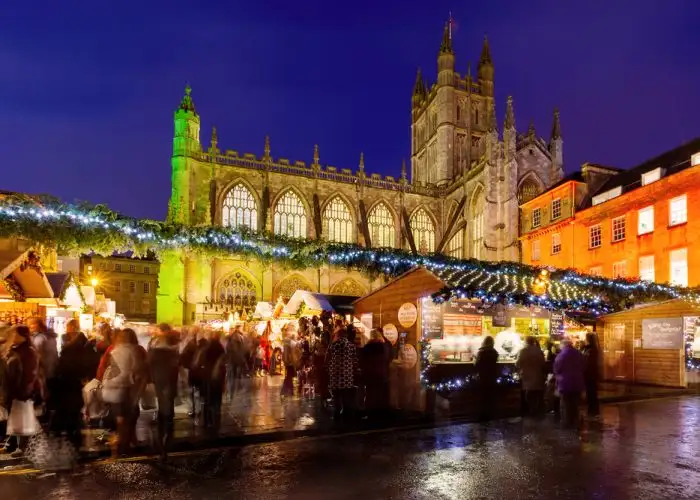
Bath, United Kingdom
While many markets try to keep things traditional, Bath works hard to ensure the majority of its makers come from the region and sell homemade products, like cheese, wooden toys, candles, and jewelry. The makers are handpicked each year to ensure you get access to the highest quality products and a distinctly British experience. The selection of ales and mulled cider doesn’t hurt.
And, in the spirit of giving back, the market invites a different local charity each day to run a stall in an effort to build awareness and raise funds.
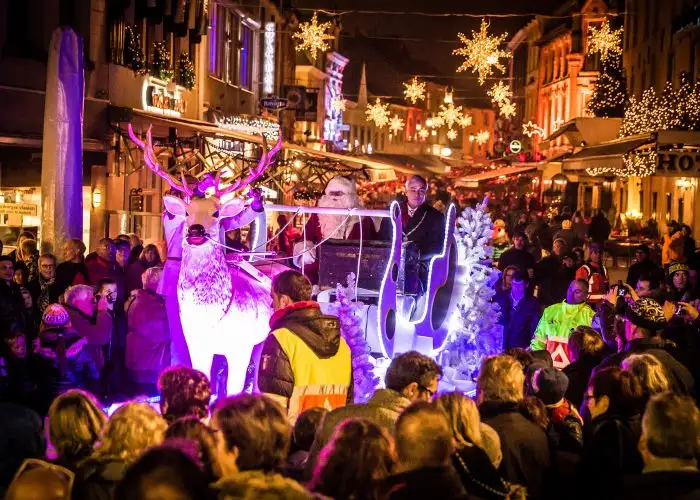
Valkenburg, Netherlands
Valkenburg doesn’t have the largest Christmas markets or the most traditional. But what it does have are two markets in caves. The Christmas market Municipal Cave, at the foot of the Cauberg hill, is the largest and oldest underground holiday market on the continent.
The market in the Velvet Cave allows you to see murals, sculptures, and an 18th-century chapel among the Christmas market stalls. The Valkenburg Castle ruins are also open to visit when you tire of shopping.
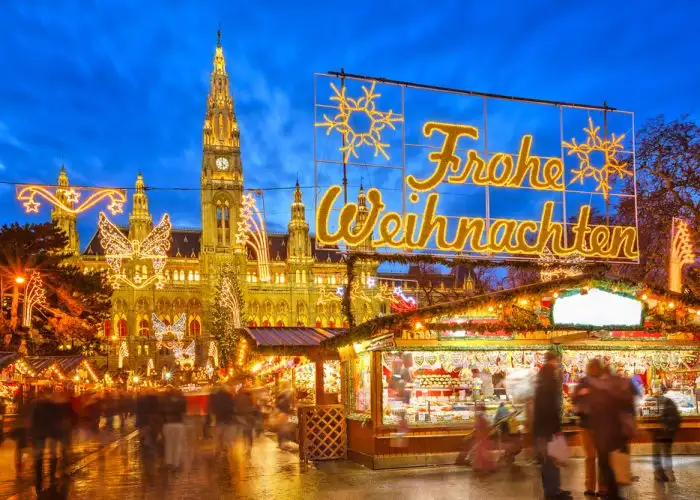
Vienna, Austria
Vienna’s markets date back to the Krippenmarkt or December Market in 1298. The more than 20 official advent markets across the city differ from their Middle Age predecessors, selling seasonal gifts, foods, and drinks.
The architectural gems found across the city provide these markets with arguably some of the best backdrops to sip your gluhwein, with stalls set up in front of landmarks such as City Hall, Belvedere Palace, and Schonbrunn Palace.
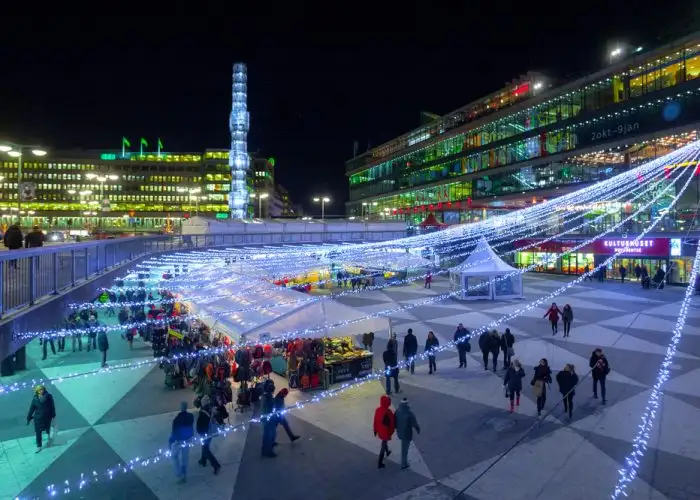
Stockholm, Sweden
Each year Skansen, the world’s first open-air museum, adds a little holiday spirit to its grounds. Its traditional Christmas market goes beyond stalls selling traditional handicrafts, glogg, and traditional food like Saffransbullar (though there’s plenty of that).
The museum gives you a taste of Christmas over five centuries of Swedish history with activities like making traditional decorations and candles, baking ginger biscuits, brewing beer, and listening to storytellers tell Yuletide tales and choirs sing Lucia music. Inside the houses and farmsteads you can see how Christmas was traditionally celebrated, while horse-drawn carriage rides will whisk you across snowy grounds.
Stockholm’s Old Town also holds its own market.
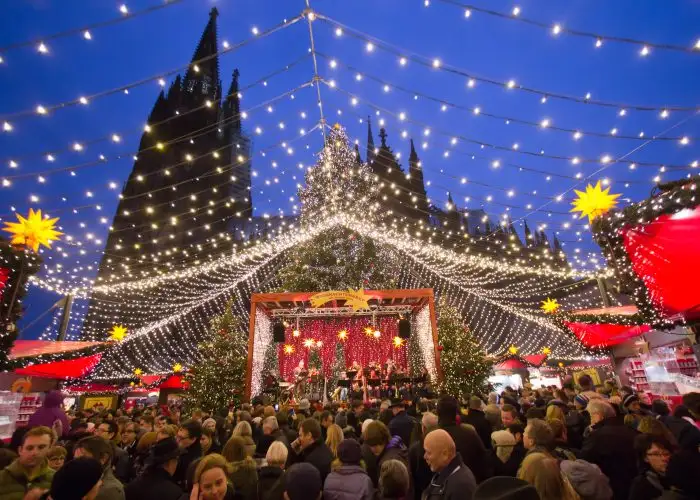
Cologne, Germany
With more than a half dozen Christmas markets scattered through the city each year, Cologne has something for everyone.
The city, called Germany’s gay and lesbian capital, even has a gay and lesbian Christmas market offering traditional market wares with a twist (think: pink nutcrackers). You’ll also find markets in the Old Town and in front of the cathedral, plus an ice-skating rink, making it nearly impossible not to get in the holiday spirit.
Brussels, Belgium
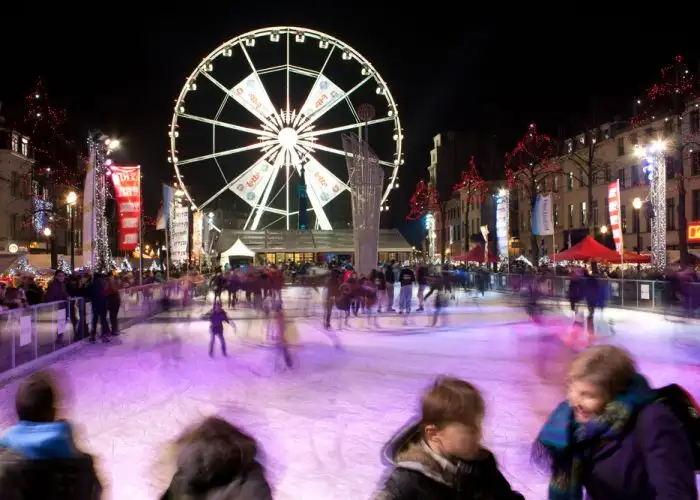
Brussels’ Winter Wonders Christmas market is unique in that you can find hundreds of stalls with food and gifts from around the world. Each year, the market invites guests from other parts of the world to share its country’s own traditions, including places like Japan, Lapland, and Quebec. You can, of course, easily find Belgian’s famous gifts to the culinary world: mussels, waffles, fries, beer, and chocolate.
The city makes it easy for you to choose the highest quality Christmas gifts, with labels identifying artisan producers. There’s plenty of entertainment in the form an ice skating rink, merry-go-rounds, and a Ferris wheel. In the spirit of the holidays, there is a toy and blanket collection for children in need.
Bolzano, Italy
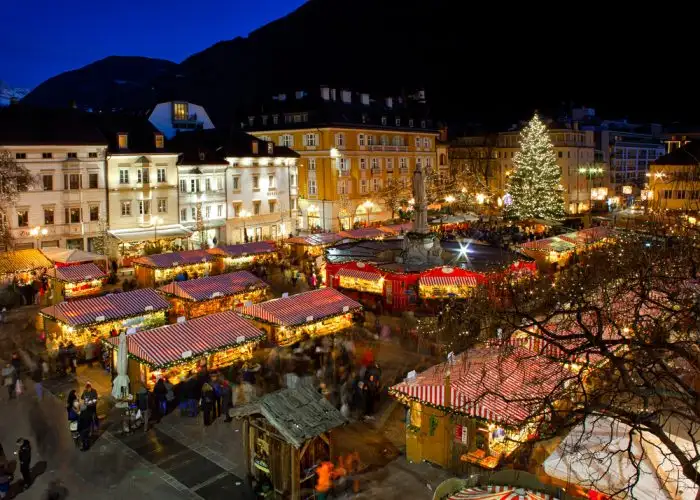
There’s a definite German influence in Bolzano, due to its proximity to its northern neighbor. But Bolzano, in Italy’s north, adds its own touches (for starters, there’s Italian spiced wine in lieu of gluhwein). It’s also a Green Event, certified for its ecological and environmentally friendly practices, including using food and drink that is seasonal, regional, and organic.
Due to strict regulations, the stalls only sell locally produced wares like candles, wooden decorations and toys, sheepskin slippers, and traditional cakes. You can even watch some of the area’s craftsmen as they work.
Zagreb, Croatia
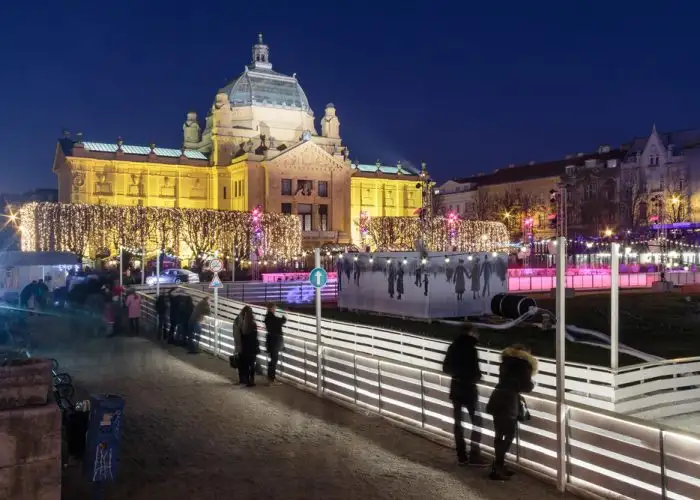
Advent in Zagreb captures the joy of Christmas with its array of musical entertainment. You'll find people dancing in the streets during open-air discos, plus DJs performing around the city and concerts from pop and punk to classical Christmas melodies and waltzes.
There’s plenty of tradition, too. You’ll find a live nativity scene, ice-skating, gingerbread, and mulled wine, alongside Croatian staples like krpice sa zeljem (pasta with cabbage). Each year, an array of activities keeps both children and adults entertained, with events like art workshops and chef pastry demonstrations.
More from SmarterTravel:
- The 3 Most Festive Christmas Destinations in the World
- North America’s Top Christmas Markets
- Weird and Terrifying Christmas Traditions
We hand-pick everything we recommend and select items through testing and reviews. Some products are sent to us free of charge with no incentive to offer a favorable review. We offer our unbiased opinions and do not accept compensation to review products. All items are in stock and prices are accurate at the time of publication. If you buy something through our links, we may earn a commission.
Top Fares From




Today's Top Travel Deals
Brought to you by ShermansTravel
France: 8-Night Paris, Avignon & Nice...
Infinity Worldwide Vacations
 vacation
$2880+
vacation
$2880+
Poconos: 3 Nts in Garden of...
ResortsAndLodges.com
 hotel
$305+
hotel
$305+
7-Nt Canada & New England Cruise,...
Princess Cruises
 cruise
$839+
cruise
$839+