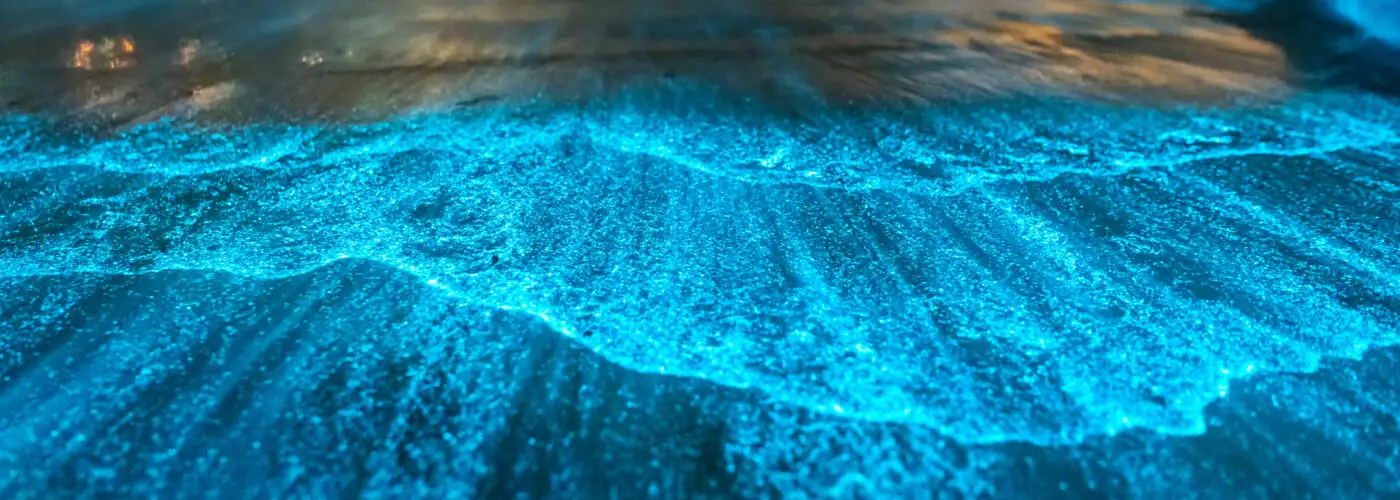
Dip a hand into dark water and sparkles explode in a trail that traces your fingers’ path—this glow-in-the-dark phenomenon looks like a special effect in a movie, but it can be found in real life at a bioluminescent beach or bay.
What is Bioluminescence?
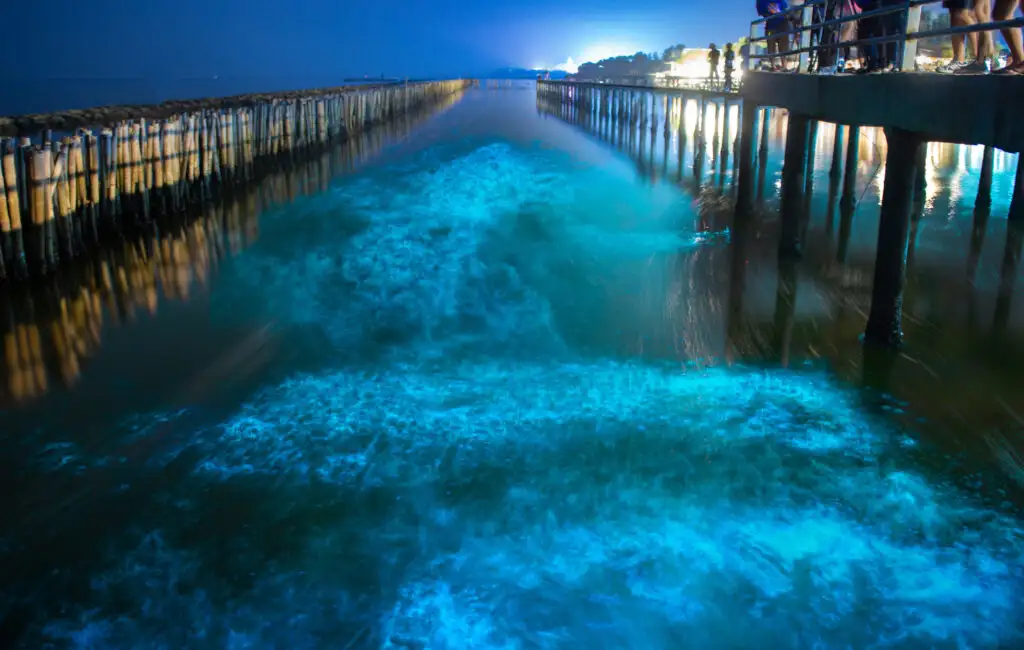
Bioluminescence is an effect found in water that is caused by a natural chemical process produced by an algae bloom of plankton. When there is motion in the water, the plankton will react by glowing brightly.
Where Can You See Bioluminescent Beaches and Bays?
If you want to see this phenomenon for yourself, put these bioluminescent beaches and bays on your bucket list.
Puerto Mosquito (Mosquito Bay), Vieques, Puerto Rico
Officially named the brightest bioluminescent bay in the world by Guinness World Records, Mosquito Bay is one of the best places in the world to witness the phenomenon. Located on the small island of Vieques, the bay is a quick ferry ride away from San Juan.
The bay has become even brighter after 2017—according to Discover Puerto Rico, the concentration of dinoflagellates (the plankton that makes the water glow) “inexplicably doubled” after Hurricane Maria.
Luminous Lagoon, Falmouth, Jamaica
Jamaica’s Luminous Lagoon is one of just four bioluminescent lagoons in the world—and, with millions of dinoflagellates, it’s the brightest. After dark, hop on a tour of the lagoon from Glistening Waters Marina and marvel as the water lights up in the wake of the boat.
Swimming is encouraged in the warm, shallow lagoon so you can watch as the water lights up with every movement you make.
Indian River Lagoon, Florida, United States
To witness bioluminescence without leaving the continental United States, your best bet is to head to the Indian River Lagoon in Florida, which was billed as “the most reliable display of naturally occurring bioluminescence” in the country by National Geographic.
Both comb jellyfish and dinoflagellates generate bioluminescence in these waters, meaning you’ll have a good chance to see it no matter the time of year.
La Parguera, Lajas, Puerto Rico
If you want a full-body bioluminescent experience, head to La Parguera—the only bioluminescent bay in Puerto Rico where swimming is allowed. Book a snorkeling tour and feel like you’re swimming through a night sky full of stars in this unique place.
San Juan Island, Washington, United States
You’ll have to time it just right to catch the magical bioluminescence in the waters around San Juan Island. The phenomenon is most active after hot and sunny days, and it’s easiest to see on dark, moonless nights.
Visit in June through September to have the best chances of experiencing bioluminescence.
When Is the Best Time to See Bioluminescence?
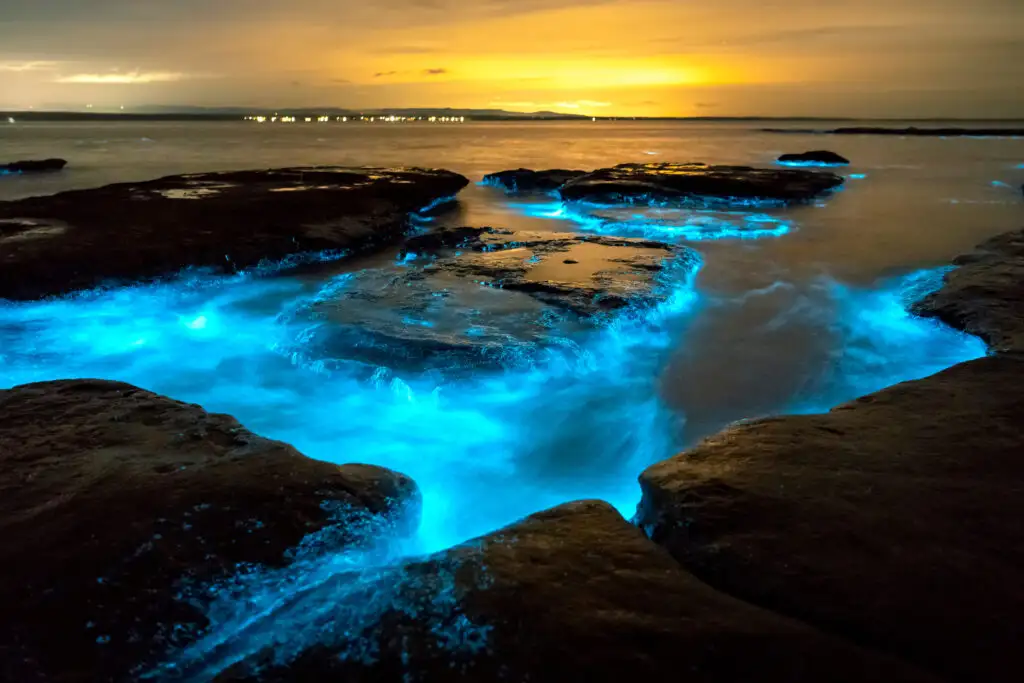
Bioluminescence is most visible in the dark—so visiting during the new moon (when there is the least amount of light) is the best time.
Is It Safe to Swim in Bioluminescent Water?
Whether or not it’s safe to swim in bioluminescent water depends on the environment. Some creatures that produce bioluminescence, like the algal bloom that causes “red tide” can be toxic, and humans would want to avoid swimming with them. There can also be other environmental hazards in the water that would make it unsafe to swim in, especially at night, so always do your research before jumping in.
Many bioluminescent bays and beaches also prohibit swimming in order to protect the environment—adhere to local rules around swimming.
Tips for Visiting a Bioluminescent Bay or Beach
To have the best experience when visiting a bioluminescent bay or beach, follow these tips.
- Leave your phone behind—most photos of bioluminescent waters you see online are heavily Photoshopped. The phenomenon is actually very difficult to capture on camera.
- Visit on a dark night for the best visibility.
- If you’re swimming in a bioluminescent bay, shower before you visit and avoid wearing lotions and bug spray as chemicals can pollute the fragile ecosystem.
- Book a tour. The best way to experience bioluminescent waters is to get in them (or out on them). From glass-bottomed kayaks to snorkeling tours, there are many unique ways to see the phenomenon.
You Might Also Like:
• How to Do a Day Trip to Provincetown, Massachusetts From Boston• The 6 Best Lightweight Waterproof Hiking Boots for Travel
• 6 Hidden, Cheap Beach Destinations on the Gulf Coast
• The 10 Best Group Travel Tour Companies for 2024
• The Essential Beach Packing List
We hand-pick everything we recommend and select items through testing and reviews. Some products are sent to us free of charge with no incentive to offer a favorable review. We offer our unbiased opinions and do not accept compensation to review products. All items are in stock and prices are accurate at the time of publication. If you buy something through our links, we may earn a commission.
Top Fares From




Today's Top Travel Deals
Brought to you by ShermansTravel
France: 8-Night Paris, Avignon & Nice...
Infinity Worldwide Vacations
 vacation
$2880+
vacation
$2880+
Poconos: 3 Nts in Garden of...
ResortsAndLodges.com
 hotel
$305+
hotel
$305+
7-Nt Canada & New England Cruise,...
Princess Cruises
 cruise
$839+
cruise
$839+