
Japan Cherry Blossom Trip Itinerary 2027

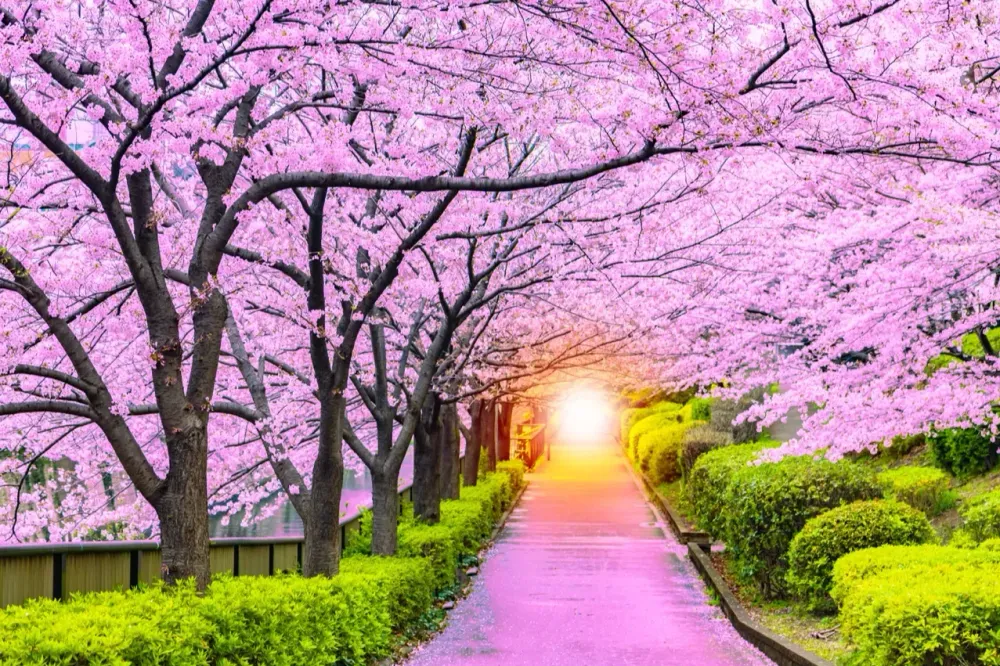
The 2027 cherry blossom forecast won't come out until January. The hotels you want will be gone by then. Here's how to book a 10-day sakura trip now without betting on the wrong week.
Peak bloom lasts about a week. The first real forecast doesn't arrive until mid-December at the earliest, often later, and by then the hotels in Higashiyama are gone. Every family in Japan, plus everyone else who's ever seen a photo of Kyoto in April, is planning the same week you are.
The fix isn't waiting for certainty. It's booking the trip in two phases. A skeleton you lock down now, and a bloom-week decision you make later, once the data comes out.
Why the Forecast Can't Save You
The 10-Day Tokyo-Kyoto Plan
The 2026 Costs Most Guides Haven't Caught Yet
Book the Skeleton, Not the Week
Japan's cherry blossom forecasts come from a handful of private weather companies, not a single government source, and they don't always agree on a release date. The Japan Meteorological Corporation put out its first 2026-season forecast on December 18, 2025, with updates roughly every three weeks after that. Other forecasters, including the Japan Weather Association, didn't publish their first calls until late January.
For the 2027 season, expect the same staggered rollout with a first guess in mid-December 2026, more forecasters weighing in through January, and the numbers tightening only in February and March, by which point the better rooms in Kyoto's Higashiyama district are gone.
Translation: if you wait for a forecast you can trust, you're booking leftovers.
This itinerary assumes a late-March to early-April window to take advantage of Tokyo's average full bloom date, while building in slack because averages aren't promises. In 2026, a mild winter pushed Tokyo's first bloom to March 21 and Kyoto's to March 25, about a week ahead of the historical norm. Treat any single date as a guess until a dated forecast says otherwise.
Days 1-4: Tokyo. Land, adjust, and give the city room to work. Shinjuku Gyoen has one of the longest cherry blossom seasons in Tokyo thanks to its mix of early and late varieties. Ueno Park handles the crowds with its sheer volume of trees. For the single best evening of the trip, walk the Chidorigafuchi moat near the Imperial Palace, where paper lanterns light the blossoms after dark and rowboats drift underneath them for about 800 yen per 30 minutes. Staying near Shinjuku puts you a short walk from the garden and close to the train lines you'll need later. The Park Hyatt Tokyo sits right in that neighborhood, 52 floors up with the kind of views that make jet lag feel optional.
Day 5: Travel day. Take the Shinkansen to Kyoto midmorning, after the first rush of commuters clears. The trip runs about two and a quarter hours on the Nozomi or closer to two and three-quarters on the Hikari. Either way you'll want a window seat on the right side of the train for a great view of Mount Fuji. Check into Kyoto in the afternoon with enough daylight left for a first look at Higashiyama.
Days 6-9: Kyoto. This is the stretch worth protecting. Maruyama Park anchors Higashiyama with a single ancient weeping cherry tree that gets lit up at night, and it's an easy walk from Yasaka Shrine. ThePhilosopher's Pathruns about two kilometers along a canal between Ginkaku-ji and Nanzen-ji, overhung with blossoms and genuinely quiet if you go before 9 a.m. Give one full day to Arashiyama on the west side of the city. Get to the bamboo grove first thing then work your way down to the Togetsukyo Bridge. Save one day as a buffer. Use it for a day trip to Nara to see the deer park, a rain contingency, or simply a second pass through whichever spot bloomed better than expected. Base yourself at the Hotel Granvia Kyoto, which sits directly on top of Kyoto Station. Cherry blossom week means hauling luggage through a packed train station exactly once instead of twice.
Day 10: Depart. Fly out of Osaka's Kansai airport if your flight pattern allows it, which saves the backtrack to Tokyo, or take the Shinkansen back to catch a flight from Narita or Haneda.
The Japan Rail Pass got more expensive on October 1, 2026. A standard 7-day pass rose from 50,000 yen (roughly $320) to 53,000 yen (roughly $340) through an overseas agency, the first hike since 2023, according toJR Group's official price notice. JR is freezing the old rate "for a limited time" for anyone who buys through the official online reservation site instead, with no announced end date.
Skip the pass for this itinerary anyway. A one-way Tokyo-to-Kyoto Shinkansen seat runs about 13,500 to 14,500 yen, about $85 to $95. It only pays off if you're adding legs such as a Nara day trip by JR train, a Hiroshima detour, or a Hakone side trip. If your buffer day turns into one of those, run the numbers again.
Kyoto's hotel tax jumped as much as tenfold in March 2026. The city's new five-tier accommodation tax tops out at 10,000 yen ($64), up from a 1,000 yen ($6) per person, per night for rooms over 100,000 yen ($640 USD). Rooms under 6,000 yen ($40) a night still pay just 200 yen (@ $1). Budget stays are mostly unaffected. Mid-range and luxury hotels in Higashiyama will feel this, and the tax shows up as a separate line item at checkout, not folded into the room rate you see when booking.
Japan's departure tax tripled in July 2026. The international tourist tax, sometimes called the "sayonara tax," rose from 1,000 yen ($6) to 3,000 yen ($18) per person for anyone flying out of the country. It's baked into the ticket price already, so you won't see it as a separate charge. It's part of why fares haven't softened the way they used to after a price spike.
Lock in the parts of this trip that don't depend on which week the blossoms open. Flights and hotels for a late-March or early-April departure typically need booking five to six months out, which for a 2027 trip means committing by October or November 2026, earlier than the three-to-five-month window that works for ordinary Tokyo travel. Book refundable or cancellable rates wherever Kyoto hotels offer them, since the whole point is flexibility once a real forecast exists. Set fare alerts through AirfareWatchdog now rather than waiting.
Hold off on the things that depend on bloom timing like Shinkansen seat reservations, restaurant bookings tied to specific gardens, and any single-day tour that only makes sense if the trees cooperate. Those can wait until January or February, when the forecasters finally have something to say.