
Handling Hurricane Season Flight Cancellations

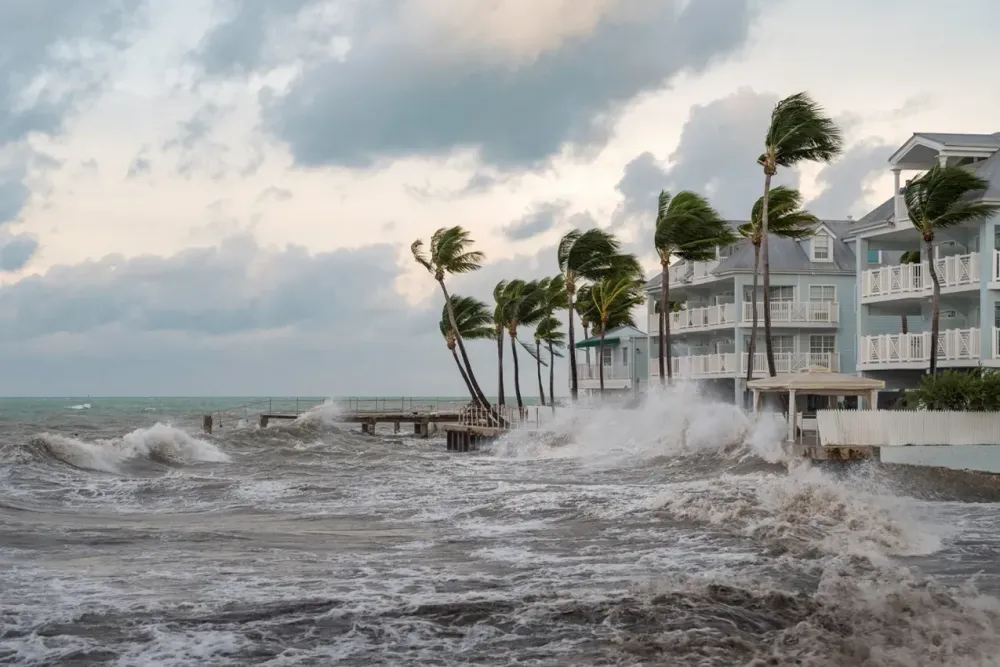
A hurricane gives you real advance notice, unlike most disruptions. The National Hurricane Center forecasts up to five days out, with a watch meaning conditions are possible within 48 hours and a warning meaning they're expected within 36. That beats anything a mechanical delay or crew scheduling mess gives you, which is why your best move happens before the storm hits, not after.
The rights don't change, though. Hurricanes fall outside the airline-controlled category under federal reporting rules, so there's no requirement for cash, a hotel, or a meal. What changes is how much time you get to act. This year's season peaked on September 10 and has run quieter than usual, which makes the waivers and refund rules below worth knowing before you need them.
What Airlines Owe You
The Advance Notice Hurricanes Give You
How to Use the Warning Before It Becomes a Cancellation
Trip Insurance Has a Cutoff You Might Already Have Missed
The Backup Layer: Your Credit Card
This Year, By the Numbers
Not much is the short answer. Weather sits in its own federal reporting category, separate from anything the airline could have prevented, so the meal and hotel commitments that apply to a mechanical delay or a crew scheduling mess don't apply here. Nearly all of the large U.S. airlines tracked by the DOT's own dashboard commit to providing meals during qualifying controllable disruptions, and most commit to hotel accommodations after an overnight one, but check the word controllable. A hurricane doesn't qualify, so gate agents have no obligation to provide either, even if you're stuck for two days.
What you're owed, regardless of the cause, is a refund. If your flight is canceled, or significantly changed (departure or arrival shifted three hours or more domestically, six hours internationally, or a rebooking that adds connections, downgrades your cabin, or moves you to a different airport), you're entitled to your money back if you decline the alternative flight.
The airline has to issue that refund automatically, without you filing anything, within seven business days for a credit card or 20 calendar days for other payment methods. If they push a travel credit instead of cash, that credit has to stay valid for at least five years, and they're required to tell you that you can say no. If you take the significantly changed flight or the alternative the airline offers, you generally give up your right to a refund under DOT rules, whatever time you lost getting there.
One new wrinkle worth knowing before it takes effect on October 19: the Department of Transportation just finalized a rule that formally removes ten specific causes, including airport closures triggered by high wind or wind shear, from the airline-controlled reporting category. It's principally a reporting-category change, but because airline meal and hotel commitments are tied to that same "controllable" label, DOT's own analysis says the change is expected to reduce the amenities travelers receive in these situations. Wind shear closures often hit airports well outside a hurricane's direct path, the kind of disruption a storm's outer bands cause without ever making landfall nearby, and now those closures can't be counted as controllable either.
Airlines don't wait for an official watch or warning before they act. As a storm threatens an airport or connecting hub, carriers often issue travel waivers on their own judgment, sometimes before a formalNational Hurricane Centerproduct takes effect, letting you change your flight for free: no change fee, no fare difference, as long as you keep the same origin and destination and travel within the window they set.
Hurricane Lowell, a Central Pacific storm, showed exactly how this plays out. As it approached Kauai in early September, American, United, Alaska, and Hawaiian each posted separate waivers, with different covered cities and different rebooking windows. American's waivercovered Honolulu, Kona, Kahului, and Lihuefor travel through September 9, with rebooked travel allowed through September 14. Alaska's applied only to Lihue, with a shorter rebooking window through September 11.Lihue's airport closedthe afternoon of September 7 as the storm neared and reopened the morning of September 8 once it passed.
The catch: waivers are narrow by design. They cover specific cities, specific travel dates, and tickets purchased by a specific cutoff. Buy a ticket after the waiver posts and you're outside it. Change your destination city and you'll likely owe a fare difference.
Check your airline's travel advisories page the moment a watch gets issued for your destination, not after your flight shows a delay. American, Delta, United, Southwest, and JetBlue all post these separately from general flight status, and they update as the forecast shifts. Waivers usually appear before the airline cancels anything, so acting on day one gets you the pick of remaining seats instead of whatever's left once everyone else on your flight had the same idea.
Track the storm yourself rather than relying on secondhand alerts. The National Hurricane Center issues full advisories every six hours, more often once a watch or warning is active, which is more current than most news coverage by the time it reaches you.
Travel insurance can cover hurricane-related losses, but only when the storm causes something your specific policy treats as a covered event: a carrier cancellation, an official hurricane warning, or your destination becoming uninhabitable, among others. Buying the policy early isn't enough on its own. You also generally have to buy it before the storm becomes a named tropical storm. Once it's named, losses tied to that storm are considered foreseeable, and new policies exclude them. Buying after a storm is already named is one of the most common reasons hurricane-related claims get denied.
If you want protection against a storm that hasn't formed yet, or the freedom to cancel a trip just because a hurricane is making you nervous without an official warning, that requires Cancel for Any Reason coverage, sold as an add-on. CFAR has to be purchased within 14 to 21 days of your initial trip deposit, not whenever hurricane season starts worrying you, and it typically reimburses 50 to 75 percent of your prepaid costs rather than the full amount a standard covered cancellation pays. Most policies also require you to cancel at least 48 to 72 hours before departure and to insure the full nonrefundable cost of the trip, not just the flight, to stay eligible. If you're booking a fall trip to Florida, the Caribbean, or the Gulf Coast, buy soon after your first deposit, before any storm anywhere near your destination gets a name.
If you're stranded without a hotel or meal voucher because the disruption was weather, not the airline's fault, your credit card's trip delay coverage might fill the gap. Chase Sapphire Reserve can reimburse up to $500 per covered traveler for a common-carrier delay of six hours or more, or one requiring an overnight stay, when the cause is a covered hazard, which can include severe weather. Its separate trip cancellation and interruption coverage can reimburse up to $10,000 per covered traveler when a covered event, not just any disruption, derails the trip. You'll need to have charged at least the required portion of the trip to that card (or used eligible rewards) and save every receipt, and you'll file a claim after the fact rather than expecting anything at the gate.
NOAA's forecasters put the odds of abelow-normal Atlantic seasonat 75 percent, and El Niño's wind shear has kept a lid on development so far this year. As of September 9, five storms had reached tropical storm strength in the Atlantic (Arthur, Bertha, Cristobal, Dolly, and Edouard), andnone had yet strengthened into a hurricane, an unusually slow start by the standards of the satellite era. Lowell, mentioned above, was a Central Pacific storm and doesn't count toward those Atlantic figures. It's a separate season in a separate basin, and a quiet Atlantic doesn't tell you anything about the Pacific.