
Finding Affordable Business Class Fares

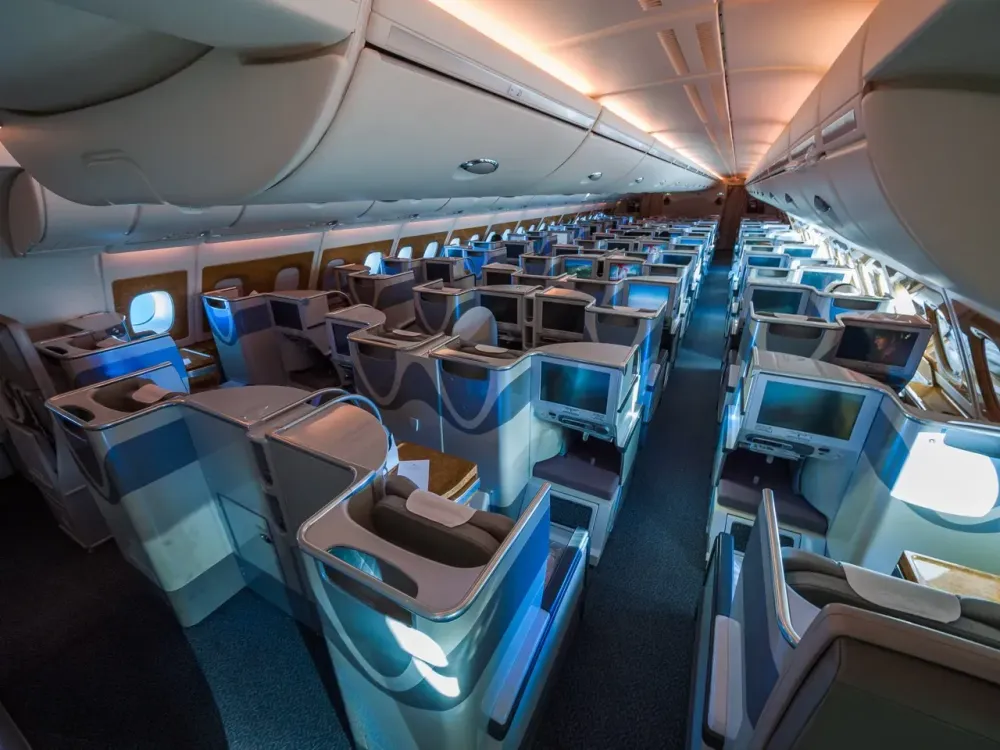
A business class seat to Europe can cost $1,200. It can also cost $6,000. Same cabin, same seat, wildly varied pricing. The difference comes down to timing, tools, and knowing which fare you're buying.
You don't need elite status or a six-figure mileage balance, you need to know when airlines discount the front of the plane, how to get alerted the moment they do, and where a growing number of "business" fares quietly cut corners.
When Airlines Discount the Front of the Plane
Let Airfarewatchdog Do the Watching
Turn Credit Card Points Into a Business Seat
Bid for the Upgrade Instead of Buying It Outright
Read the Fine Print Before You Book
Final Thoughts
Business class fills from two directions. Corporate travelers book late and pay full fare. Leisure travelers wait for a deal. Airlines price around both behaviors, which means the cheapest fares show up in predictable windows rather than randomly.
January and February are the slow months for long-haul travel. Corporate bookings drop after the holidays, and airlines discount to keep cabins full. Black Friday and Cyber Monday sales are hit or miss, but airlines including British Airways and Virgin Atlantic have run genuine business class promotions during that week in recent years. The end of a fiscal quarter helps too. Airlines under revenue pressure drop prices in late March, June, and September to hit their numbers.
Midweek departures help on top of all that. Tuesday and Wednesday flights run cheaper than Friday and Sunday on most routes, business class included.
Route matters too. Airlines with a large hub to defend, like Turkish Airlines through Istanbul, tend to compete hardest on price to Asia, Africa, and the Middle East, since filling that hub is the whole business model. A flight that connects through a hub airline's home base is worth comparing against the nonstop option even if it adds an hour or two.
Every so often, a fare glitch slips through as well. Mistake fares are real, but they're rare and they vanish fast, sometimes within hours. Catching one means having an alert already running before it happens, not searching for it after the fact.
You cannot refresh a search bar for three months waiting for a sale to appear. Airfarewatchdog, SmarterTravel's sister site, does that for you. Set your home airport and it emails you when fares drop, including premium cabin deals most search engines bury under a wall of economy results.
The free tier covers economy fares in the US, Canada, Mexico, and the Caribbean. For business and first class alerts in those same regions, Jetsetter membership runs $149 a year. Globetrotter, at $249 a year, adds worldwide business and first class deals to Europe, Asia, Africa, and beyond, plus member hotel discounts.
That's not a small fee. But catch one good business class sale and the membership pays for itself several times over, then keeps working for every trip after that.
If you carry a card that earns Chase Ultimate Rewards, American Express Membership Rewards, or a similar transferable currency, you have a second lever you can pull.
Transfer to the right airline partner and a seat that costs thousands in cash can drop to a fraction of that in points plus taxes. Point.me tracked a New York to London business class seat pricing at $2,708 in cash, or 30,000 Virgin Atlantic points plus about $23 in taxes, transferred straight from Chase Ultimate Rewards.
A few specific places to look. Virgin Atlantic for nonstop flights to London, where Upper Class runs from around 35,000 points each way, though fuel surcharges add $400 to $700 on top. British Airways, which releases up to four business seats per flight roughly a year before departure, and Air France and KLM's Flying Blue program which publishes rotating monthly discounts that can cut a transatlantic business redemption by 20 to 50 percent.
One catch: confirm a bookable seat exists before you transfer. Most transfers are final. Move your points first and the award space you wanted may already be gone.
There's also a simpler rule worth keeping in your back pocket. When an airline runs a genuine cash sale on a route your points program prices high, the sale fare sometimes beats the points redemption outright. Do the math before you spend a single point.
Here's a distinction most advice glosses over. Fly a major international carrier and an actual bidding system, run by a company called Plusgrade, may let you name your own price for an upgrade. Air Canada, ANA, Cathay Pacific, Etihad, Lufthansa, Qantas, and Virgin Atlantic all run some version of it. Book economy, wait for the bidding invitation, name a number above the posted minimum, and find out a few days before departure whether you won.
American, Delta, and United don't work this way. None of the three US majors run a true bid-to-upgrade auction. Hawaiian is currently the only US airline that does. The domestic majors instead sell fixed-price upgrade offers, shown at booking or by email closer to departure. These often cost less than booking business outright. Different action, same result if you catch it.
Either way, check what the upgrade includes before you commit. A winning bid doesn't always carry the same perks as a ticket bought in business class from the start. Lounge access, in particular, is sometimes prohibited. For more on landing an upgrade without an auction at all, SmarterTravel's guide to scoring a free airline upgrade covers the rest of the playbook.
Speaking of lounges, the cheapest business fare on the results page may not be the business class you're picturing.
Emirates, Etihad, Qatar Airways, and Finnair have sold stripped-down business fares for years, cutting lounge access and seat selection to hit a lower headline price. In 2026, US carriers caught up. United launched a base-tier Polaris fare in the spring, andDelta followed with its own Basic Business fare in July, rolling out on flights starting that September. Both keep the lie-flat seat and the onboard service. Both drop free seat selection and upgrade eligibility, and eventually, automatic lounge access. Delta is giving Basic Business flyers a grace period on lounge entry through mid-January 2027. After that, a business class boarding pass alone won't get you in.
Getting to the front of the plane for less isn't one trick. It's stacking the right one for the trip you're taking: a sale fare when the calendar lines up, points when the transfer math works, a bid when your airline offers one, and a clear read of what you're buying either way. Set an alert for your home airport, watch for the January dip, and let the deals come to you instead of the other way around.
None of this requires becoming a points hobbyist or rearranging your calendar around a fare sale. It just requires knowing the levers exist before you pay full price for one.