
Argentina in Spring from Buenos Aires, to Patagonia
Argentina crossed into spring in late September, and by the time most Americans start thinking about it, half the season will already be gone. Jacarandas are about to turn Buenos Aires violet, Patagonia's trekking season just opened with a fraction of its January crowds, and prices haven't caught up to the local summer rush that starts in mid-December. Two weeks covers the highlights without feeling rushed: three or four days in Buenos Aires, two at Iguazú Falls, and the rest in Patagonia around El Calafate and El Chaltén.
Why November, Specifically
Buenos Aires: Three or Four Days
Iguazú Falls: Two Days
Patagonia: El Calafate and El Chaltén
Getting There and Booking It
Argentina's seasons run opposite the Northern Hemisphere's, so spring stretches from late September through December. US citizens can enter visa-free for stays up to 90 days, and the $160 reciprocity fee that used to apply was scrapped back in 2016. A passport valid for the length of the trip is the only paperwork required.
Money is simpler than it used to be, too. Argentina lifted its currency controls in April 2025, and the old gap between the official exchange rate and the black-market "blue dollar" rate has effectively closed, with both now trading around 1,430 to 1,460 pesos per dollar. That means there's no real upside left to hunting down street money-changers. A debit or credit card with no foreign transaction fee gets a fair rate at ATMs and checkout, though it's still worth carrying some pesos in cash for smaller vendors, markets, and tips that don't run cards.
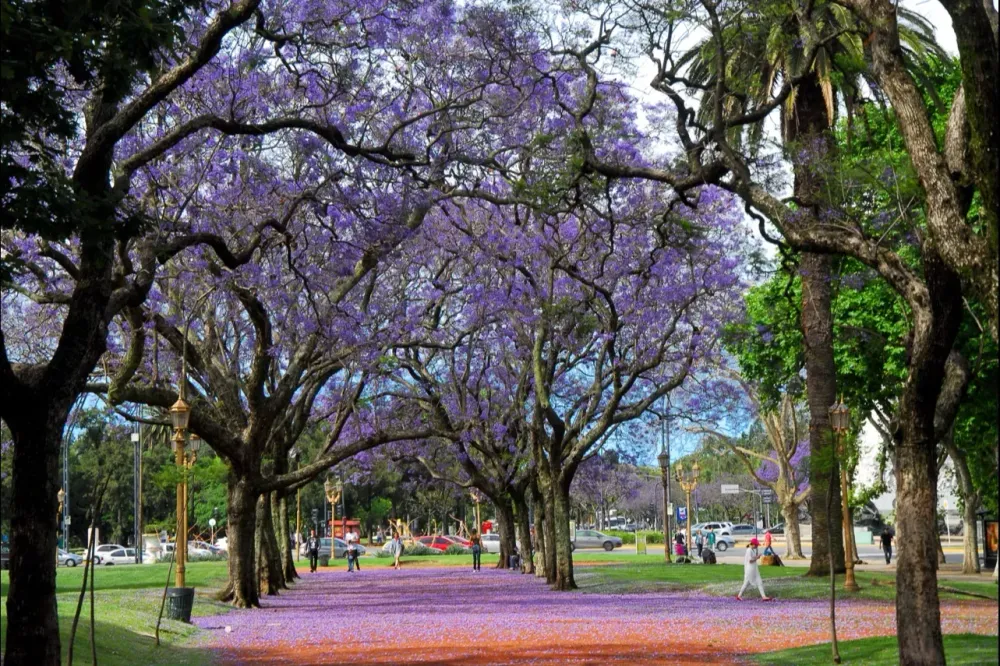
Buenos Aires's jacaranda trees peak in November, turning avenues like Del Libertador and Cabildo into violet tunnels for about a month. Patagonia's trekking season runs October through April, but the Southern Hemisphere's summer holidays, mid-December through February, send Argentine and Chilean families flooding into El Chaltén and Torres del Paine. Consequently, lodges there often book out 12 to 18 months ahead for that stretch. Trek the same trails in November or early-December and the glacier looks identical, minus the wait for a dinner table.
The tradeoff is unpredictability. Patagonian spring days swing between sun, rain, and gusts strong enough to end a conversation, sometimes within the same afternoon. Pack layers, and don't build a trip around one specific photo.
Base in Palermo, the city's largest and leafiest neighborhood, and work outward. The Fierro Hotel Buenos Aires, a 27-room boutique property in Palermo Viejo, puts you within walking distance of the restaurant scene without the traffic noise of the main avenues.
Mornings belong to Recoleta. La Recoleta Cemetery holds the graves of more than two dozen Argentine presidents along with Eva Perón, laid out in marble corridors dense enough that getting lost is part of the visit. Admission is free, and it's open daily from 8 a.m. to 6 p.m. Afternoons go to the Bosques de Palermo, the city's string of parks and lakes anchored by the Rosedal rose garden. Rent a bike or just walk until the jacarandas start showing up overhead.
Getting between neighborhoods is easier than it looks on a map. The Subte (subway) and city buses now take contactless debit and credit cards directly, no SUBE transit card required, though it's worth confirming with your card issuer that foreign cards work before relying on one at the turnstile. The national commuter trains are the exception; those still require a SUBE card, which attention centers at subway stations sell and top up for cash.
Dinner starts late here, closer to 9 or 10 p.m. than 7, and a parrilla reservation is worth making ahead on weekends in Palermo Soho. A tango show is the obvious tourist move, and it earns the attention. Book one with live music rather than a recorded track, and skip the dinner-and-show package if the food isn't the point.
Flights from Buenos Aires to Puerto Iguazú run about two hours on Aerolíneas Argentinas, with several departures daily from both Ezeiza and the downtown Aeroparque Jorge Newbery airport. Spring puts the falls in a sweet spot: daytime temperatures in the upper 70s and low 80s, with water flow building toward the wet season without the full summer deluge that can shut down some walkways.
General admission to Iguazú National Park runs around AR$45,000 for non-residents, roughly $40, though peso prices move with inflation. The park is open daily from 8 a.m. to 6 p.m. Buy tickets online to skip the line, and revalidate them at the end of day one for 50% off a second day. The Upper and Lower Circuits plus the Devil's Throat walkway genuinely need two days to cover without rushing. Devil's Throat is the one to prioritize. It’s a 269-foot drop you stand directly above that’s loud enough that you can’t talk over it.
The Loi Suites Iguazú, set inside the rainforest 15 minutes from the falls, puts jungle views on every balcony and three pools between the buildings. It sits far enough from town that a car or the hotel's own transfers beat trying to walk anywhere.
There's no way around a backtrack here. Argentina's domestic routes hub through Buenos Aires, so getting from Iguazú to Patagonia means flying back to the capital and connecting to El Calafate, not flying there directly. Aerolíneas Argentinas, LATAM, and JetSMART all fly that El Calafate leg, and the whole trip, layover included, runs around five hours of flying.
El Calafate itself is Patagonia's gateway town, and its reason for existing is only 50 miles away: the Perito Moreno Glacier, a wall of ice nearly three miles wide that calves into Lago Argentino in chunks loud enough to hear from the viewing platforms. A network of boardwalks gets you close without a guide, but there are boat tours and guided ice treks to get you closer still.
Base at the Design Suites Calafate, a lakefront hotel with floor-to-ceiling windows aimed at Lago Argentino and the mountains behind it.
El Chaltén sits three hours north by road, and it bills itself, accurately, as Argentina's trekking capital. The hike to Laguna de los Tres, an eight-hour round trip ending at a glacial lake beneath Mount Fitz Roy, is the headline trail, though shorter options like Laguna Capri cover similar scenery in a fraction of the time. In November and early December, the trails are open but the wind hasn't hit its peak summer intensity, with daytime highs running a comfortable 55 to 61 degrees. Day-trip it from El Calafate if time is tight, or stay a night and get an early start before the afternoon wind picks up.
Nonstop flights to Buenos Aires's Ezeiza airport run from Miami, Atlanta, Houston, Dallas, and New York, operated by American, Delta, United, and Aerolíneas Argentinas, with flight times around 9 to 11 hours depending on the city. Fares tend to climb once Argentina's own summer travel season kicks in around December, so booking travel now, while demand is lower, is the better financial move. AirfareWatchdog tracks international routes like this one and is worth a few minutes to set an alert on your home airport.
Domestic flights between Buenos Aires, Iguazú, and El Calafate are cheapest and most frequent through Aerolíneas Argentinas directly, and booking all three legs together tends to avoid the layover gaps that come from piecing together separate one-way tickets.