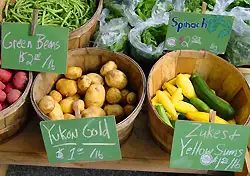
Few travelers are aware that food can travel almost as far as they do, if not farther, to reach a destination. In fact, most products are transported 1,500 miles on average to get from were they are grown to where they are eaten. As a result, food has become less regional, a serious drawback for travelers who believe that tasting the flavors of an area—like fresh maple syrup while in Vermont or local wine while in Napa—are a vital part of the experience.
Some destinations, however, are returning to the land to offer their freshest bounty and are presenting it locally, naturally, and directly from their farms to your table.
Eating local helps ensure an authentic culinary experience, giving people exceptional taste and freshness while bringing them closer to the source. It also allows travelers to give back to the local community. According to Tracey Ryder, co-founder of Edible Communities, it “builds a significant relationship between eater and farmer, and people know they can trust where their food is coming from.” She adds, “as much as the food is helping to sustain us, we’re helping to sustain those who grow it.”
But what makes regional food special for travelers? Erik Wolf, President & CEO of the International Culinary Tourism Association, says that “Food involves all five of the human senses, so it has a higher chance to make a longer lasting impression than any other tourist attraction. And foods that are fresh and local will make a better impression than those that aren’t.”
As more places in North America realize their potential as food destinations, unique opportunities are arising for visitors. With this concept, often expressed as “farm-to-table,” people don’t just sit and eat, but can get involved with their food by visiting or staying on a working farm, taking outdoor cooking classes, picking produce ripe from a garden, or learning about whole food production through tours and hands-on experience. And of course, there’s quite a bit of eating, too.
Here are several destinations with an abundance of farm-to-table offerings.
NEXT >> Santa Barbara
Santa Barbara
Santa Barbara’s mild, Mediterranean climate is great for growing produce year-round. Talk to people there and it quickly becomes clear that fresh and local is not so much an interest as a passion. And it’s one that visitors can delight in.
What to do
Eleven farmers’ markets around Santa Barbara County keep local produce accessible almost every day of the week. For an even fresher look at produce at a uniquely visitor-friendly farm, Fairview Gardens offers guided and free self-guided tours around its organic farm daily. Depending on the time of year, visitors will find specialties such as white asparagus, cherimoya, and strawberries. It offers cooking classes in an outdoor kitchen that overlooks the orchard. Classes range from $50 to $125.
Santa Barbara also offers a way to get back to the land and go back in time. The Huerta Project at Mission Santa Barbara provides a fascinating look at the history of farm-to-table in Spanish California. This living museum of plants grown at California’s 21 missions holds native grapes, 200-year-old olive, pear, and citrus trees; native woodland strawberries; and hundreds of other species of edible and useful plants. Access to the Huerta is restricted but free, and the two ways to visit are by joining the Wednesday morning volunteer work group or by private tour. For more information about either, contact Huerta Project Manager Jerry Sortomme.
In Santa Barbara, it’s not just the land that offers bounty. On Saturday mornings, visitors can head down to the wharf and buy fresh spot prawns, rock crab, and spiny lobster from the decks of fishing boats that ply the waters of the Santa Barbara Channel. Visitors can also purchase oysters and other shellfish farmed in nearby waters.
In northern Santa Barbara County, vineyards and farms blanket the valleys, and a yearly strawberry festival celebrates the region’s very popular crop. More than 80 wineries make it a major tasting destination. And, at the Clairmont Lavender Farm, located two minutes outside the charming small town of Los Olivos, visitors can walk in the fields, picnic, and watch as one of the farm’s handmade copper distillers extracts oil from the buds.
Where to stay
The Simpson House Inn offers vegetarian breakfasts and evening appetizers made with many local ingredients. Cakes greet guests on arrival and handmade chocolates arrive each evening. Rates start at $235 per night.
Other accommodations that offer a close-to-the-land experience are The Alisal Guest Ranch & Resort, set on a working cattle ranch, with rates from $450; and El Encanto Hotel and Garden Villas, nestled into seven acres of botanic gardens, with rates from $189. The Santa Barbara Conference & Visitors Bureau (CVB) also posts culinary themed getaway packages.
Where to eat
At the downtown Santa Barbara restaurant bouchon, the food is as fresh and as local as possible, and there’s an all-Santa Barbara County wine list (though others are available). The nearby 31 West restaurant in the Hotel Andalucia, offers a $28 three-course prix fixe farmers market dinner available every Tuesday night.
On weekend nights at American Flatbread in tiny Los Alamos, pizzas made from local ingredients are cooked in a wood-burning oven in the open kitchen. Glasses of local wine are a fixture on diners’ tables, and it’s a great place to eavesdrop on conversations by local vintners about the state of the current crop.
Find more information
The not-to-be-missed resource for Santa Barbara is the Savor the Flavors guide published by the Santa Barbara CVB and available free online or in print.
When to go: Bounty is the norm year-round, though for farm-to-table travel, visitors may enjoy being outside more by avoiding the rainiest winter months. Check suggested itineraries for each month for a better idea of what to expect.
NEXT >> Vermont
Vermont
It’s a spring morning, and Ellen Terie of Shepherd’s Hill Farm serves fresh lamb sausage and omelets made from just-laid eggs to her lodgers. While they discuss eco-friendly farm practices, Jason Tostrup, executive chef of the Inn at Weathersfield, comes to pick up lamb chops for his sustainable restaurant. He chats awhile about seasonal ramps and micro greens, then leaves to prepare his daily menu. Ellen then heads to the barn, with guests in tow, to attend her herd, nourishing it with all-natural feed.
This is a typical day in Vermont, where food is often attended to and distributed personally, building a community web between the producer, the cook, and the consumer. While many producers progressively aim to restore local farming, utilizing the latest organic methods, many family farmers have just always done it this way. Regardless, the appropriately nicknamed “Green Mountain State” remains well ahead as an agricultural destination, and is more than willing to share its yield with visitors.
What to do
Visiting a family-run working farm is one of the best ways to learn about Vermont food firsthand. Primarily known for its cheddar, the state also turns out different varieties of cow, goat, and even sheep milk farmstead cheeses. Many artisans welcome guests to observe the cheese-making process at no charge, while others charge a nominal fee. At Thistle Hill Farm, John Putnam carefully raises Jersey cows with organic methods, and makes an award-winning French Alps-inspired Tarentaise cheese from their milk. Sugarbush Farm and Neighborly Farms, both notable for maple syrup and unique cheddars like sage and onion, provide a host of visitor activities and a farm store. The Vermont Cheese Council outlines dozens of cheese makers along with an organized cheese trail.
Other Vermont farms focus on vegetables, berries, meats, and various dairy products. Most farms are free and offer tasting samples. Note that farmers are often busy working so don’t expect constant attention during your visit. It’s also a good idea to call in advance to make sure the farm is in production on a given day.
For a more formalized tour, Shelburne Farms and Billings Farm & Museum are nonprofit working farms presented as educational centers. Both are committed to promoting conservation with visitor-ready programs, and charge a nominal admission fee.
Farmers’ markets can be a fun way to find the freshest produce, and nearly every town has its own, usually on Saturday mornings. Some, like the Norwich Farmers Market, go all out with food demonstrations and live music. The Vermont Agency of Agriculture, Food & Markets offers a complete list of farmers’ markets online.
Where to stay
Many local farms open their doors to overnight guests. Liberty Hill Farm in Rochester, a Holstein dairy farm complete with iconic red barn and silo, hosts visitors for $85 per night (less for children) in its traditional country-style B&B. Guests are welcome to participate in farm chores, like bottle-feeding newborn calves, or to just hang out and play with hayloft kittens. Beth Kennett prepares a family-style dinner and breakfast made with ingredients from her own farm or bartered from her neighbors’.
In an idyllic setting overlooking Taftsville’s rolling green hills, a babbling brook, and even a covered bridge, Shepherd’s Hill lamb farm runs a B&B through its modern farmhouse with rooms starting at $135 per night. Guests can pitch in or spend their time swimming in the pond or relaxing on the property.
What to eat
Thanks to the Vermont Fresh Network, an organization that brings farmers and chefs together, it’s easy to pick out restaurants serving local. American Flatbread (the same company as in Santa Barbara), for example, makes organic pizzas baked in an earthenware oven. The original bakery location in Waitsfield grows its own produce and turns into a restaurant on Friday and Saturday nights. Recently, it has teamed up with the historic Inn at Lareau Farm, which offers affordable country stays starting at $80 per night.
Some other restaurants are a little more citified, but remain affordable with entrees under $20. pane e salute, an osteria (a small eatery) and wine bar in Woodstock, serves local items with an Italian flair, and Bistro Sauce in Shelburne, has an urban farmhouse feel and menu that highlights foraged “wild Vermont edibles.”
Find more information
The Vermont Farms Association and VermontVacation.com outline information on farm visits and stays. For a list of farms broken down by specialty, farmers’ markets, grocers, and restaurants, pick up a free copy of Valley Food & Farm Locally Grown Guide, which is also available online.
The Northeast Organic Farming Association of Vermont and the Vermont Agency of Agriculture Food and Markets also provide a wealth of related information.
When to go: Cheese makers and livestock farms are active year-round, but fresh produce and farmers’ markets are available May through October. Maple sugaring begins in March and runs through mid-April (depending on the year). Production timing on every farm is different, so be sure to check in advance, particularly during the winter months. April is the “mud season” and is often considered the least pleasant time to go.
NEXT >> San Francisco Bay Area
San Francisco Bay Area
It will come as no surprise to residents and regular visitors, but the San Francisco Bay Area is an ideal place to get beyond the plate. In some cases, you don’t even have to leave city limits. At the Saturday morning farmers’ market at the Ferry Building Marketplace, a 10:00 a.m. meet-the-farmers event is followed by a seasonal cooking demonstration at 10:30. Every day at the Ferry Building, visitors can find some of the Bay Area’s best, including local cheese from Cowgirl Creamery, organic produce from Frog Hollow Farm, and local shellfish from the Hog Island Oyster Company. And, there are rumors that 2007 may bring the first Slow Food USA artisanal food show to San Francisco.
Visitors ready to take alfresco dining to a whole new level can check out Outstanding in the Field dinners in fields around the Bay Area. Evenings include wine, a tour of the farm, and then a dinner prepared in an outdoor kitchen with local ingredients and served at a long table out in the field. Dinners, which include five courses and wine pairings, are priced between $130 and $170 per person. The 2006 season starts in June and will include six events. From August to October, the group puts on events elsewhere in the U.S.
East Bay
Across the Bay in Berkeley, the farm-to-table approach has been a tradition since Alice Waters opened Chez Panisse in 1971, and it continues to grow through farmers’ markets and restaurants that feature the fresh and the local. Farmers’ market events such as late-spring strawberry tastings and shopping with chefs are posted regularly. And, at Jack London Square in Oakland, a weekly Sunday farmers’ market draws crowds to the waterfront for produce and sunshine.
Coastside
The greater Bay Area yields more chances to peek into the food chain and taste along the way. Fresh-caught fish, artichokes, and cheese are a few of the local delights on the San Mateo Coast, also referred to as Coastside, just south of San Francisco. Harley Farms, a small goat dairy tucked into the rolling hills of Pescadero, offers tours of the cheese-making process. Tours, which should be reserved in advance, cost $20 for adults, with discounts for children. Nearby, Duarte’s Tavern keeps its tables piled high with seasonal bests. Farm stays provide a closer look at the land and a way to wake up in the fresh country air. The Half Moon Bay Coastside Chamber of Commerce has a very useful eco-cultural tourism section of its website with more ideas.
Napa and Sonoma
Look behind the acres of grapes in Napa and Sonoma to discover a thriving community of farmers and food producers. Long Meadow Ranch in the mountains above the Napa Valley has an “excellence through responsible farming” policy that extends to its wines, beef, eggs, and heirloom produce. The organic ranch is open to the public and offers tours from $35, plus hikes, picnics, and other activities.
Down in the valley, the Copia Center for Food, Wine, and the Arts has 3.5 acres of organic edible gardens open to the public. And, the center’s Julia’s Kitchen restaurant and American Market Cafe feature fresh, local ingredients. Entry is $5 for adults, with discounts for seniors and children.
Tours offer unique peeks into the area’s growing and production. Great Olive Tours brings people to small private farms around the Napa Valley to get a behind-the-scenes glimpse into organic and sustainable farming. Half-day tours are $75 an hour for groups of four. And, olive oil producer Round Pond Estate offers tours and tastings that provide a close-up view of the orchards and olive mill. Tours cost $20. The Sonoma County Farm Trails website has maps and itinerary suggestions for free self-guided tours that include farms, pumpkin patches, hard cider breweries, and working ranches.
Find more information
The California Tourism website has a food and wine section with information helpful to planning a trip. The California Agri-tourism database lists agri-tourism operations by county. And, the recently published The Slow Food Guide to San Francisco and the Bay Area is packed with fresh and local suggestions.
When to go: Farmers’ markets operate year-round in the Bay Area, but rain can make winter and spring less pleasant times to be outdoors. Visitors will find the most abundance in summer, and warm weather and more harvests in fall.
NEXT >> Charlevoix, Quebec
Charlevoix, Quebec
Quebec is famed for its French-inspired gastronomy. But one of the things that separate the province from France is its use of local Canadian products like maple, apples, and smoked seafood. Of its many regions, Charlevoix, located on the St. Lawrence about 60 miles from Quebec City, stands out with a reputation for creative fine dining made with the freshest local ingredients. As the pioneer of Quebec’s gourmet tourism concept, Charlevoix remains tied to its rural roots by avoiding commercialization and encouraging agritourism.
Charlevoix has created the Flavor Trail to link chefs, farmers, and consumers who are interested in natural food production. The route clearly identifies its members, producers who open their doors to the public, with unmistakable reddish signs featuring a white chef’s hat.
What to do
Farm visits usually come with an educational component, where visitors learn about farm production or see how food is processed firsthand. Tours, demonstrations, and best of all, samples, are all part of the experience. Many properties have on-site shops that sell specialty food products, and some charge small admission fees.
For cheese making, visitors can watch a free demonstration through viewing windows at Laiterie Charlevoix, which also has a museum, or take a free guided tour of the aging process at La Maison d’affinage Maurice Dufour (in French only).
Livestock farming also has firm stake in Quebec’s agriculture. La Ferme Basque de Charlevoix (in French only), for example, is a free-range duck farm that offers guided tours aimed at educating people on the negative effects of caging animals for $4. For something more unusual in the region, Center de l’émeu de Charlevoix raises emu and teaches visitors about the birds’ habitat and products like eggs, meat, and oil. Tours cost $5 for adults.
Cider is a locally popular item and is made from various orchard fruits like apples, pears, and cherries, which grow well in the region due to ideal microclimates. Verger Pedneault on Charlevoix’s Isle-aux-Coudres, for example, makes products without chemicals or preservatives, with or without alcohol. Its pear version is exceptional and makes for a lightly sweet aperitif. Visitors can wander the orchards or pick their own fruit in season.
At farm shops, culinary souvenirs are available for purchase and are often infused with regional flavors like cedar, maple, and even seafood. Les Finesses de Charlevoix specializes in all-natural homemade jams, vinegars, and other condiments. Le Veau Charlevoix (in French only) carries veal and organic meats, while Le Relais des Saveurs de Charlevoix (in French only) offers fois gras, duck, and smoked salmon.
Where to stay
Quebec’s country lodging is extremely affordable and comes in two forms: the B&B and auberge du passant or country inn. Along with comfortable accommodations and breakfast, most establishments prepare dazzling multi-course meals called table d’hôte (which are much cheaper than a-la-carte prices), all served with local ingredients, on the premises.
Auberge Les Sources accommodates guests with rooms and breakfast from $70 CAD (visit xe.com for the latest exchange rates), and serves a separate dinner that features local mushrooms and fresh produce. With economical lodging-and-dining packages from $93 CAD per person, Auberge la Muse is a Victorian inn with a Japanese chef, French-style cuisine, and the sights and tastes of all things Charlevoix. Auberge La Courtepointe has similar offerings to the others with rates from $90 CAD, as well as a private sugar shack where maple syrup is made during the spring.
Gîte l’Eider Matinal (in French only), a classic B&B with rooms from $100 CAD, dishes out homemade breakfasts on a patio overlooking the St. Lawrence. Guestrooms at Auberge des Falaises come with just breakfast ($70 CAD per person) or breakfast and a five-course dinner ($120 CAD). The menu is seasonal and includes innovative regional dishes like grape and honey effluvium, caramelized sweetbread with maple and Porto perfume, and selections from “the smoke-house.”
Where to eat
Restaurants, whether part of an inn or independent, are the pride of the region. Country dining elements typically include economical table d’hôte and bring-your-own-wine options, as well as dishes prepared with local and natural products.
Les Saveurs Oubliées, touts itself as Charlevoix’s very first table champêtre, or country-style restaurant, and features lamb, fish, and organic vegetables. A table d’hôte costs $43.50 CAD. It also sells distinct specialty products by its own label such as ground cherries and lavender, rose jelly, lamb spaghetti sauce, and onion confit.
Other establishments are more humble in their offerings, but still committed to the region. With most entrees costing around $10 CAD, Al Dente is a tiny restaurant that prepares homemade pastas and Italian plates like veal cannelloni, all with a local bent.
Find more information
The Charlevoix tourism and Fédération des Agricotours du Québec websites offer a wealth of information on regional agritourism.
When to go: As a general rule, producers who make cheese or packaged products are open year-round. Farms, particularly those growing fruits and vegetables, are open June through October. Each producer is different and available items may vary seasonally (e.g., apple picking is only available in September and October).
NEXT >> Pacific Northwest
Pacific Northwest
The Pacific Northwest is a veritable farm-to-table banquet. Its plentiful waters, lush farmland, and mild climate keep the fresh food coming throughout the year.
Oregon
Oregon farm-to-table highlights stretch from the Pacific to the mountains. In Portland, the Saturday farmers’ market features weekly cooking demonstrations with local ingredients and seasonal events. In the Mt. Hood area, a Feast for the Senses driving tour CD will act as your in-car agricultural expert.
Oregon’s Plate & Pitchfork farm dinners give diners the chance to get out into the fields and enjoy a local food and wine alfresco at elegant, white-cloth covered tables. The 2006 season is already sold out, which is a good reason to plan ahead for next year. Dinners that include the meal and wine cost $85 on Sundays and $95 on Friday and Saturday nights.
In addition to “u-pick” farms around the state, there are a few more unique ways to harvest your own bounty. The Mt. Hood Cultural Center often hosts a mushroom-picking event in fall, where visitors can learn to pick and cook mushrooms. And in August, Winchester Bay has a crab bounty hunt.
Washington
From guided picking tours in apple country to bog trails along the cranberry coast, there are ways to experience fresh and local all over Washington. The state tourism board has agricultural driving tour maps, and Puget Sound has a farm locator website.
Pike Place Market in Seattle is an exciting urban stop on the farm-to-table trail. This historic public market, known by many as “that place where they throw fish,” is the retail home to regional growers and producers. And, featured crops are the subject of farmer talks and cooking demonstrations at summer Sunday farmers’ markets.
At Cascadia Restaurant in Seattle’s Belltown, local is the word every day. The restaurant takes a best-source approach that includes seeking out local, sustainable, and organic ingredients. It also offers cooking classes and chef-led market tours for $75.
Vancouver and environs
Vancouver and its environs stand at the crossroads between food and table, and offer many different ways to experience the local land and sea harvests. Tourism Vancouver publishes Forks & Corks quarterly, a newsletter that details the latest food news and is a useful tool for planning food and drink excursions.
Visitors who want an informed look at the local food scene may want to check out Edible British Columbia, a company that creates personalized itineraries for culinary travel. It also hosts events such as market tours, cooking classes, and food festivals in Vancouver, Whistler, Okanagan, and on Vancouver Island.
Within Vancouver, Granville Island Public Market is among the most impressive culinary landmarks. The market, home to many regional producers and vendors, is open seven days a week and displays fresh regional food and local specialty foods.
On nearby Vancouver Island at the Sooke Harbour House, the focus is on seasonal, regional, and organic food. And, there’s more to do than just eat. Visitors can spend the day fishing, then enjoy their catch as part of a four-course dinner. The price for the fishing expedition and dinner depends on the number of people participating, but starts at $195 per person. The inn also runs less expensive seaweed tours, garden tours, and other activities.
Find more information
The Oregon tourism website features both free maps and guides, and information about food destinations around the state that have been featured on the PBS show “Caprial and John’s Kitchen”.
Washington offers suggestions for agricultural and food-based tours and excursions, and the Tourism British Columbia website has more ideas about boutique farms, wineries, and agricultural tours.
When to go: The rain that keeps the Pacific Northwest lush and fruitful is often a deterrent for visitors. Summers are the driest time of the year, and also peak season for many of the sweetest fruits and berries.
NEXT >> Upstate New York and the Berkshires
Upstate New York and the Berkshires
Farms are aplenty in Upstate New York, particularly in the Hudson Valley region, and Massachusetts’ Berkshires. Drive by the region’s endless rolling green pastureland, and it’s obvious that grazing animals like cows and sheep are more than part of the landscape. The region also produces milk and cheese, poultry and eggs, produce—from spring greens to fall pumpkins, herbs, and apples and other fruits.
What to do
Many farms have on-site stores open to visitors and supply area farmers’ markets, restaurants, and inns, including some businesses in New York City. Hawthorne Valley Farm, for instance, sends organic food to the Union Square Greenmarket twice a week. Pick-your-own orchards are also quite popular throughout the region.
Apart from its fine restaurant and farm store, the impressive Blue Hill at Stone Barns in Pocantico Hills, New York, offers an array of public events such as garden tours, cooking demonstrations, and tastings, as well as classes and lectures on farm and food topics. Docent tours cost $5; other programs are more. The restaurant serves seasonal items plucked directly from the garden or greenhouse, and diners can make reservations up to two months in advance. A second restaurant lies tucked at the bottom of a brownstone in Greenwich Village.
Fresh apple cider is a fall tradition. Along with the crisp, sweet beverage comes apple pies, cider donuts, and anything else apple you can imagine. In true cider mill character, Bartlett’s Orchard in the Berkshires and Goold Orchards in Rensselaer County, New York, allow visitors to pick their own apples, take tours, or buy apple products right from their farm stores. Hilltop Orchards, also in the Berkshires, is a “farm winery” that grows a variety of orchard fruits and makes its cider hard as well as fresh. Many orchards like these offer “u-pick” berries during the summer and sell different kinds of produce.
Where to stay
Old Inn On The Green in the Berkshires offers rustic, but elegant rooms from $215 per night; midweek lodging and dining packages are available for $99 per person. Dinners are served by candlelight and feature nouveau New England cuisine made with local ingredients.
The Looking Glass B&B in Rhinebeck, New York, has a “Savor the Flavor” package that includes a two-night stay, produce picking at Greig Farm, farm stand visits, and a picnic basket from a gourmet specialty store. All stays also include a four-course breakfast and tea in the afternoon. The package starts at $310 and is available through September and may be extended through October.
Find more information
The Regional Farm & Food Project, an organization that focuses on building awareness about agricultural sustainability, and Farm to Table, a consumer-friendly site that aims to educate people on the importance of buying local, have online directories for area farms, restaurants, and markets. The New York State Farmstead & Artisan Cheese Makers Guild outlines various cheese makers.
Berkshire Grown has a list of farms and farmers’ markets open to the public, while the Massachusetts Department of Agricultural Resources catalogs farms that offer visitor activities and farm stays.
When to go: The pick-your-own apple season runs from late August through October, and berries are available during the summer. Other produce is available seasonally. Farmers’ markets start in May or June and run through October.
NEXT >> Ways to find other farm-to-table destinations
Ways to find other farm-to-table destinations
As agritourism in North America grows, more and more farm-to-table destinations are revealing themselves. Look for areas with vast farmland such as Pennsylvania and Virginia, or coastal regions like Cape Cod and Maryland’s Chesapeake Bay.
Urban areas can also be farm-to-table hotbeds. For example, major cities like New York, Washington, D.C., St. Paul, and Cleveland have major farmers’ markets. Cities also have some of the highest concentrations of organic cafes and restaurants.
To find local, sustainable, and seasonal food in any destination, LocalHarvest and Organic Menus have extensive restaurant databases. The Eat Well Guide also has a locator tool for producers and restaurants that feature local and sustainable ingredients. When in doubt, look for independently owned restaurants that use words like “local,” “seasonal,” “farm,” “garden,” or “foraged” on their menus. And along with information about its movement, Slow Food USA announces special events open to the public like farm dinners and tastings. And the USDA website has a national farmers’ market search tool.
We hand-pick everything we recommend and select items through testing and reviews. Some products are sent to us free of charge with no incentive to offer a favorable review. We offer our unbiased opinions and do not accept compensation to review products. All items are in stock and prices are accurate at the time of publication. If you buy something through our links, we may earn a commission.
Top Fares From




Today's Top Travel Deals
Brought to you by ShermansTravel
Porto to Lisbon: 7-Nt, Small-Group Portugal...
Indus Travels
 vacation
$1899+
vacation
$1899+
Greenland: Luxe, All-Incl. 11-Nt Exploration Small-Ship...
Swan Hellenic
cruise
$3289+
Ohio: Daily Car Rentals from Cincinnati
85OFF.com
 Car Rental
$19+
Car Rental
$19+